Choose timezone
Your profile timezone:
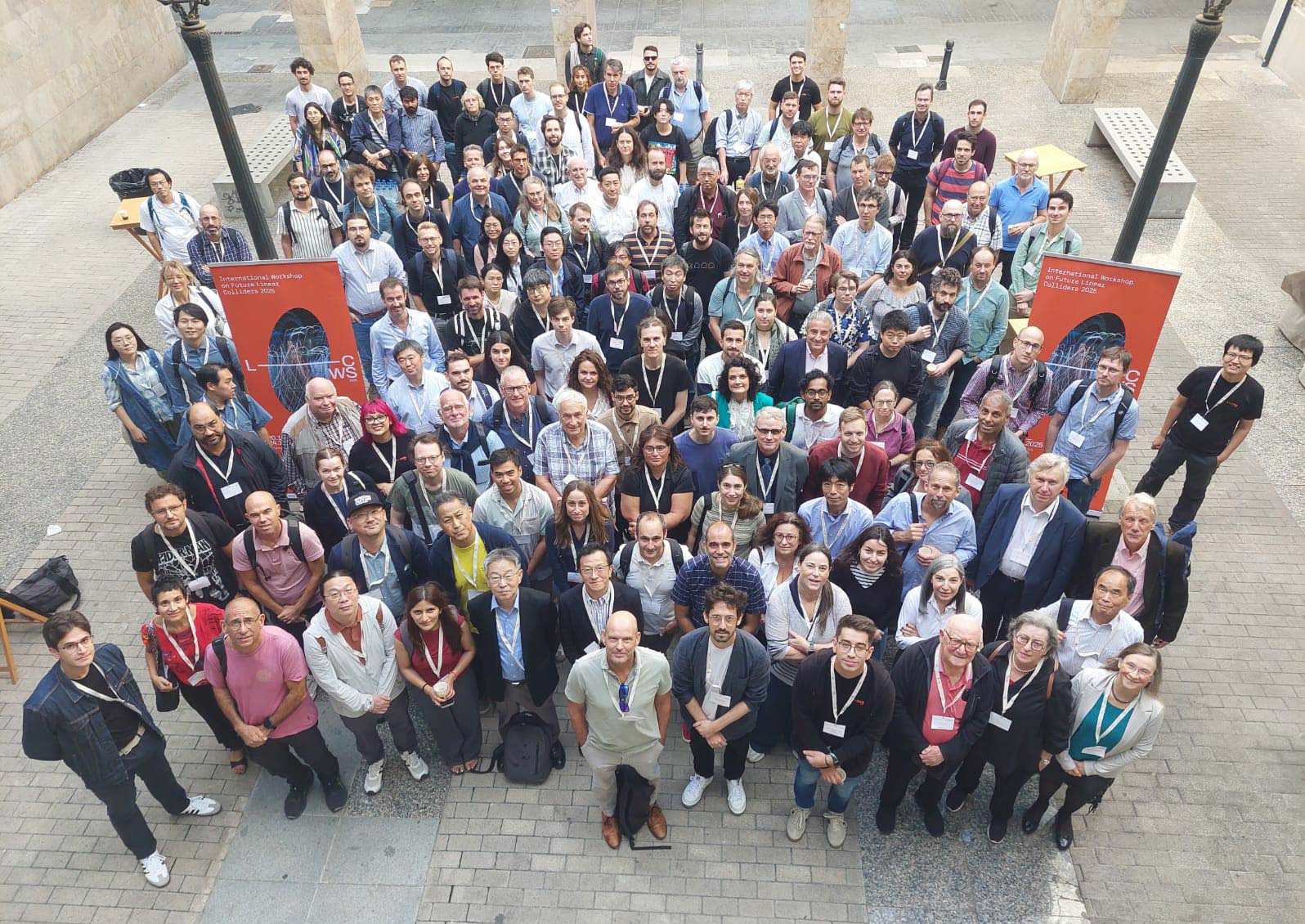
The 2025 International Workshop on Future Linear Colliders (LCWS2025) continues the series devoted to studying the physics, detectors, and accelerator issues relating to high-energy linear electron-positron colliders.
The LCWS2025 workshop will happen near the end of the third European Strategy for Particle Physics Update process which aims to "to develop a visionary and concrete plan that greatly advances knowledge in fundamental physics (sic.)" . A linear electron-positron collider project will offer the opportunity for a timely, cost-effective and staged construction of a new collider that will be able to comprehensively map the Higgs boson’s properties, including the Higgs field potential, thanks to a large span in centre-of-mass energies and polarised beams. It will also contribute to searching for new physics beyond the Standard Model with direct and indirect searches complementary to the HL-LHC.
With a wide program of plenary and parallel sessions, this workshop will provide an opportunity to present ongoing work and to get informed and involved in worldwide efforts devoted to lepton linear collider developments.
The workshop is scheduled from the afternoon of the 20th of October to the afternoon of the 24th of October, at Valencia (Spain) in two locations in the city's heart. Monday morning and Friday afternoon are available for satellite meetings or events related to the workshop.
In-person attendance at the workshop is strongly encouraged.
The 25th edition of the International Linear Collider Workshop (LCWS-2025) is organized in Valencia (Spain). The local committee comprises members of IFIC (UV/CSIC) and the Spanish Network for Future Colliders. The conference takes place from October 20th to 24th 2025 in the heart of Valencia's city center
The Insituto de Física Corpuscular, IFIC, is a joint center of the Consejo Superior de Investigaciones Científicas, CSIC, and the Universitat de València, UVEG. The IFIC is dedicated to research in nuclear, particle and astroparticle phsyics and their applications to medical physics and other fields in science and technology.
The AITANA – matter & technology – group from IFIC is a multidiscipline team that encompasses experimental particle physics and accelerator physics researchers.





placeholder
placeholder
CERN is investigating two major linear collider concepts as successors to the LHC: the Compact Linear Collider (CLIC) and the Linear Collider Facility (LCF), the latter being based on the International Linear Collider (ILC) design. Both proposals involve twin laser-straight 5.6m internal diameter tunnels, extending to lengths of 29.6km for CLIC and 33.5km for LCF, forming symmetric layouts around central interaction regions (IR) located on CERN owned land adjacent to the CERN Prévessin site.
Both colliders are being developed in tandem, sharing both geographical and geological alignments, sited within well-characterized molasse rock ideal for Tunnel Boring Machine (TBM) excavation, with the interaction region at a depth of approximately 125m. CLIC also includes an injection complex comprised of cut and cover tunnels before transitioning into the main tunnel, adding surface and connection complexities.
Most recently designed for a single detector, the IR has since been reconfigured to support two detectors, prompting critical civil engineering decisions. One approach involves widening the beam delivery system (BDS) tunnel over a 2km span to 16m either side of the IR, housing both detectors within a single cavern. Alternatively, the BDS splits into two tunnels: each branch feeding a separate, smaller cavern for increased stability, minimizing excavation footprint but introducing additional tunnelling.
This paper provides a comparative overview of these linear collider studies, focusing on civil engineering aspects, geographical and geological environments, sustainability, and the shared and unique technical challenges of each study.
Linear colliders used to have different concepts of crossing angles and the potential number of interaction regions. However, the International Linear Collider (ILC) design converged on a single-interaction region (IR) push-pull design with a 14 mrad crossing angle. In this review, I will explore the history of decisions that led to the final design. Additionally, I will try to identify lessons learned that could be applied to design decisions for current proposals, such as the Linear Collider Facility (LCF) at CERN.
Superconducting Magnet Division, Brookhaven National Laboratory invented a unique superconducting magnet design and development technology which can be considered as 3D printing of Superconducting magnets. The magnets developed using this technology are known as Direct Wind Magnets. The magnets developed using this technology are deployed at several colliders, accelerators and experimental facilities across the world. These include HERA-II, SuperKEKB, BEPC, JPARC, Apha-3 at CERN, JPARC etc. This technology was the baseline design for main final focus quadrupoles for International Linear Collider (ILC) and the Electron Ion Collider (EIC) coming up at Brookhaven National Laboratory heavily depend on Direct Wind Technology for interaction region magnets. The corrector magnets for FCCee Interaction region are proposed to be built using this technology. The existing direct wind correctors in SuperKEKB will be replaced with newer correctors in SuperKEKB upgrade.
Direct Wind magnet technology is a novel method of constructing complex, multi-functional, multi-polarity, nested, compact, high homogeneity superconducting magnets without the need of custom tooling and fixtures for each new magnet project. In this technology, magnetic measurements at intermediate stages are integrated with production to carry out field harmonic compensation which helps in production of high homogeneity magnets.
This talk will detail this technology along with its usefulness and relevance for interaction region magnets of a high luminosity collider. Current projects and recent magnets produced using this technology will also be discussed along with brief design overview of ILC main final focus quadrupoles. Several advances are proposed for this technology including direct wind magnets using HTS, Nb3Sn, new cable design and incorporation of passive and active quench protection system. Direct Wind is one of BNL’s original contributions to Accelerator Science and technology.
Beam-beam interactions constitute an important source of background at any electron-positron ($e^{+}e^{-}$) collider, generating the so-called beam-beam background, with important implications for the design of detectors and their performance. In this talk, we will analyze the impact of beam-beam background for the Cool Copper Collider (C$^3$), utilizing full detector simulation for the SiD detector concept within key4hep and evaluating the occupancy for different subdetector systems. We systematically study the impact on these backgrounds of different beam parameter sets for C$^3$ designed to reduce the total power consumption of the machine. We will also present first studies on beam parameter configurations that achieve significantly higher luminosity through tighter emittances, without compromising detector performance. Our results aim to offer important insights into the interplay between detector and accelerator performance, towards a comprehensive framework to optimize for machine luminosity and power consumption of future linear collider projects.
Since its inception, the field of Advanced Accelerators has regarded future particle-physics colliders as the ultimate application of > 1 GV/m accelerator technology. Over the last decades, rapid experimental and theoretical progress [1,2,3] drove a conceptual evolution of potential future colliders based on Wakefield Accelerator (WFA) technology. The recent P5 Report [4] calls for “vigorous R&D toward a cost-effective 10 TeV pCM collider based on proton, muon, or possible wakefield technologies.” Specifically, the P5 Report requests “the delivery of an end-to-end design concept, including cost scales, with self-consistent parameters throughout.” This contribution will outline the opportunities, requirements, and challenges for a 10 TeV WFA collider, both as a standalone machine and as an upgrade path within the LCVision framework, and will introduce a community-driven design process based on working groups and performance metrics including a timeline with deliverables. We will describe progress in the design study, including developments on the physics case at 10 TeV, beam-beam interactions with large beamstrahlung, and considerations on wakefield accelerator staging options.
[1] C. A. Lindstrøm et al. “Beam-driven plasma-wakefield acceleration”, arXiv:2504.05558 (2025)
[2] E. Esarey et al. “Physics of laser-driven plasma-based electron accelerators”, Rev. Mod. Phys. 81, 1229 (2009)
[3] C. Jing “Dielectric Wakefield Accelerators”, Rev. Accel. Sci. Tech, 9, 127 (2016)
[4] P5 Report www.usparticlephysics.org/2023-p5-report/
We quantify the physics potential of various beam configurations for 10 TeV wakefield colliders, including the impact of beam-beam interactions. We study e+e- and e-e- colliders with round and flat beams, as well as a \gamma\gamma collider. Though large beam-beam interactions tend to increase the Standard Model backgrounds, we find that these backgrounds can usually be mitigated on the analysis level. In addition, beam-beam interactions tend to enhance the signal of beyond the standard model physics and present new discovery opportunities.
Laser-driven plasma accelerators have demonstrated single-stage acceleration of electron beams up to 10 GeV over tens of cm, and these compact laser-plasma accelerating structures offer the potential to reduce the size and cost of a future energy-frontier linear collider. In this presentation, I will discuss the design considerations for the application of laser-driven plasma-based accelerator technology for a multi-TeV linear collider. Key to the realization of the collider application is the development of high average and high peak power laser systems, operating with high efficiency. Coherent combination of fiber lasers is a promising solution to achieve high average and high peak power lasers suitable for high-energy physics applications, and I will describe recent progress on laser technology. I will also discuss gamma-gamma colliders at multi-TeV, as well as application of laser-plasma technology as an upgrade to RF linear colliders.
Structure-wakefield acceleration (SWFA) presents a promising route to a multi-TeV linear collider by combining GV/m-class gradients with high wall-plug efficiency and components suitable for industrial-scale production. In SWFA, a high-charge drive beam excites wakefields in engineered solid-state structures to accelerate a low-emittance “main” beam. Prospective collider configurations are evaluated using experimentally grounded parameters for accelerating fields (0.3–1 GV/m), staging, beam loading, and drive-to-main power transfer. Key technical challenges—emittance preservation across thousands of stages, wakefield phase stability, and positron acceleration—are mapped to an R&D program emphasizing high-efficiency two-beam RF power generation and distribution, novel structure development, precision synchronization, advanced jitter control, and optics strategies for single-bunch stability. SWFA offers competitive wall-plug power requirements for center-of-mass energies in the 1–10 TeV range, while providing a modular upgrade path toward other wakefield-based collider technologies, including collinear concepts based on structures or plasmas
The 10 TeV Wakefield Collider Design Study [1] aims to produce a self-consistent, start-to-end design of a 10 TeV-center-of-mass linear collider based on wakefields technology. One of the considered options for driving the main linac is beam-driven plasma wakefield acceleration (PWFA). The goal of the PWFA-Linac Working Group is to identify the main challenges and showstoppers, and to define a set of global metrics to optimize the proposed solutions.
We summarize the recent discussions and present some basic considerations on the PWFA Linac design, such as the energy loss due to synchrotron radiation in the chicanes between each plasma stage.
[1] S. Gessner et al., arXiv:2503.20214 (2025)
I will review recent developments in the theory of the energy spectrum of luminosity at 10 TeV e+e- colliders and the implications for physics.
Production of the leptophilic Z' boson at the future colliders has been proposed as one of the benchmark BSM scenarios for the Briefing Book being prepared for the 2026 update of the European Strategy for Particle Physics. Presented in this contributions are results on the sensitivity of the ILC experiment to $L_e - L_\mu$ scenario. Expected cross section limits as a function of the Z' boson mass are calculated for the di-muon signature, which is expected to give strongest constraints. Signal and background simulation in WHIZARD includes effects of multi-photon emission and ISR, with proper matching between ISR and matrix element domains.
In this talk, we discuss the possibility of detecting new SM-neutral vector bosons ($Z'$) that couple exclusively to leptons at the FCC-ee. Focusing on the $Z'$ production with a radiated photon, we show that the FCC-ee can significantly extend the unprobed parameter space by increasing the exclusion in the coupling by one to two orders of magnitude in the kinematically allowed mass range (from 10 GeV to 365 GeV), with the leading sensitivity being driven by the muon search channel. Further, we explore the possibility of improving the sensitivity of the FCC-ee to this model through the modification of the dilepton invariant mass resolution and the photon energy resolution, and conclude by taking a look at the impact of systematic uncertainties on the expected sensitivities.
Several new physics scenarios still allow for novel scalar states with masses below a few hundred GeV. In this talk, I will give a short overview on such scenarios and comment on some recent search studies at Higgs factories.
The physics program of the Higgs factory will focus on measurements of the 125 GeV Higgs boson, with the Higgs-strahlung process being the dominant production channel at 250 GeV. However, similar production of exotic light scalars, in a scalar-strahlug process, is still not excluded by the existing experimental data, provided their coupling to the SM gauge bosons is sufficiently suppressed. This was selected as one of the focus topics of the ECFA Higgs/Top/EW factory study. Presented in this contribution are the expected cross section limits from the search in the $b\bar{b}$ decay channel, based on a full simulation of the International Large Detector (ILD), as well as the expected sensitivity in di-tau and invisible decay channels, based on the fast simulation in the DELPHES framework, assuming 250 GeV ILC running scenario.
The direct pair-production of the superpartner of the $\tau$-lepton, the $\widetilde{\tau}$,
is one
of the most interesting channels to search for SUSY in:
the $\widetilde{\tau}$ is
likely to be the lightest of the scalar leptons,
and is one of the most experimentally challennging ones.
The current model-independent $\widetilde{\tau}$ limits come from LEP,
while limits obtained at the LHC do extend to higher masses, but are model-dependent.
The future Higgs factories will be powerful facilities for SUSY searches, offering advantages
with respect to previous electron-positron colliders as well as to hadron machines.
In order to quantify the capabilities of these future $e^+e^-$ colliders,
the ``worst-case'' scenario for $\widetilde{\tau}$ exclusion/discovery has been studied, taking
into account the effect of the $\widetilde{\tau}$ mixing on $\widetilde{\tau}$ production
cross-section and detection efficiency.
To evaluate the latter, the ILD concept, originally developed for the International
Linear Collider (ILC), and the ILC beam conditions at a centre-of-mass energy of
$500$\,GeV have been used for detailed simulations.
The obtained exclusion and discovery reaches extend to only a few GeV below the kinematic limit
even in the worst-case scenario.
A recast of the results of the detailed simulation study to ILC at different CM energies,
and to the experimental environment of other proposed Higgs factory projects is also
presented.
The existence of Higgs-like scalars, which could be produced at
electron-positron collider in association with a Z boson, is predicted
by many BSM models and, assuming a small
coupling to the Z boson, still not excluded by experimental data.
Prospects for discovering such an scalar at future Higgs
factories have been studied by different methods.
The most model-independent one is based on the recoil of the new
particle against the Z, since this is independent of the decay modes of the new scalar.
Based on this method, searches were performed for any mass of the
scalar and for two different decays of the Z boson, to a pair of
muons and to a pair of electrons. The combination of the limits obtained
by the two Z decay modes was also performed.
For detector-level simulations, the study takes the ILD detector concept
and ILC parameters at 250 GeV as example. Full simulated background samples
were used by the study, while for signal samples the SGV fast simulation,
adapted to the ILD, was used for detector simulation and high-level reconstruction.
Global Analysis
There is broad agreement that the next major collider should include an e⁺e⁻ Higgs factory mode. Yet, given the remarkable progress expected from the HL-LHC, I argue that a program focusing too heavily on Higgs coupling measurements is not ambitious enough, be it linear or circular. The critical question is what additional capabilities each design offers. Circular machines provide unparalleled low-energy luminosity, enabling production of trillions of Z bosons, while linear colliders excel at multi-TeV energies. To this end, I compare the indirect sensitivity to BSM physics from a circular Tera-Z precision program with that of a linear collider operating at energies above 1 TeV. To maximize BSM discovery potential, linear collider proposals should re-focus on cost-effective designs exceeding the 1 TeV threshold.
Within the framework of the Standard Model Effective Field Theory (SMEFT), next-to-leading order (NLO) calculations reveal sensitivities to a broad class of higher-dimensional operators, including those affecting top quark interactions, Higgs couplings, and potential sources of CP violation, that may remain hidden at leading order.
In this talk, I will highlight recent advances in NLO SMEFT analyses relevant to future $e^+e^-$ programs, illustrating how precision studies can uncover indirect signs of new physics. I will emphasize how both direct and indirect searches across different energy regimes offer complementary sensitivities within the broader landscape of BSM scenarios, and how the combined efforts of future accelerator programs can provide a more complete picture. Particular attention will be given to operators that contribute at loop level, and to how future measurements may offer insight into potential modifications of Higgs decay channels.
We present results from a global fit of Standard Model parameters and dimension-6 SMEFT Wilson coefficients that includes electroweak, Drell-Yan, Higgs-boson, top-quark, and flavour observables. Fits obtained by floating individual coefficients are also discussed. The leading-order scale dependence of the SMEFT Wilson coefficients is consistently included in the evolution from the UV scale to the electroweak scale and the low-energy scale of flavour observables. In defining the SMEFT set of active operators we consider both the $U(3)^5$ and the $U(2)^5$ flavour symmetric limits. All fits are obtained within the $\texttt{HEPfit}$ framework and are based on the most recent experimental results and state-of-the-art theoretical predictions for all the observables considered.
I will present a global study of the reach in Higgs, electroweak, and top quark couplings at the future high-energy particle colliders proposed in the context of the European Strategy for Particle Physics 2026 Update (ESPPU26). I will discuss electron-positron circular (FCC-ee, CEPC) and linear (LCF) colliders. The global fit results, produced with the latest version of the SMEFiT code, take into account the effect of the renormalization group evolution (RGE) and the available NLO corrections to the SMEFT cross-sections. These new results are presented in terms of bounds on Wilson coefficients and effective couplings, and offer a valuable perspective on the potential of these colliders to probe physics beyond the Standard Model.
e+e- colliders operating at energies below the di-Higgs production threshold can provide information on the trilinear Higgs self-coupling lambda via its loop contributions to single Higgs production processes and electroweak precision observables. We investigate how well a non-SM value of lambda can be determined indirectly via its loop contributions to a global EFT fit. Using a doublet extension of the SM Higgs sector as an example for a scenario of physics beyond the SM that could be realised in nature, we find that the results for lambda obtained from the global EFT fit differ significantly from the actual value of lambda in the considered scenarios unless additional systematic uncertainties are considered. We find that theoretical uncertainties that are connected to the treatment of loop contributions and the truncation of the EFT expansion play an important role in this mismatch. The results obtained from such an indirect determination of lambda via its loop contributions in an EFT fit, without taking additional uncertainties into account, could therefore be misleading in the quest to precisely identify the underlying physics of electroweak symmetry breaking. We furthermore discuss the role of di-Higgs production in the determination of the trilinear Higgs self-coupling.
We study the extraction of (anomalous) $ZWW/\gamma WW$ triple gauge couplings (aTGC) in the $e^+e^-\rightarrow \ell\nu q\bar{q}$ process at $250\,\text{GeV}$ from full simulation and reconstruction with the ILD detector.
Determining aTGC at the sub-permille level is vital for the precise and consistent determination of Higgs couplings in global fits and adds important constraints on SMEFT, scrutinising the electroweak gauge symmetry.
We perform a modified optimal observable analysis, combining the classical approach with elements from modern binned maximum likelihood fits, enabling the consistent study of systematic errors and straightforward inclusion of external constraints.
By using the Key4hep software ecosystem, the analysis is performed in a reusable way, easily extendable to other detector and machine configurations.
A five-year project (MEXT advanced Accelerator element Technology Development (MEXT-ATD)) funded by the Ministry of Education, Culture, Sports, Science and Technology (MEXT) began at KEK in FY2023. The goal is to manufacture, construct and test a cryomodule (CM) that satisfies the ILC (International Linear Collider Project) specifications and conduct cooling tests. The MEXT-ATD program is closely related to the ILC Technology Network (ITN). Many SRF experts from Europe and Korea are already joining to contribute to 9-cell cavity production in each region. The 3D model of the cryomodule will be based on the Type-4 CM adopted in the Technical Design Report (TDR) published in 2013, moreover will also reflect the latest technology and experience obtained from the construction and operation of the European XFEL in Europe and LCLS-II in the United States since the TDR. In addition, in anticipation of future prospects, it has been decided that the design and production of every cavity and CM will be based on the refrigeration regulations of the High Pressure Gas Safety (HPGS) Act in Japan. In this presentation, the basic specifications and design of the cryomodule as well as the overall manufacturing/test schedule and recent progress will be reported in detailed.
In the scope of the MEXT ATD and the ILC Technology Network (ITN) an ILC prototype cavities are currently being fabricated at KEK and at a vendor. The main Nb material for the central cell-part of cavity are conventional Fine-Grain (FG) Nb and newly introduced Medium-Grain (MG) Nb. We already fabricated four FG-Nb and two MG-Nb 1.3-GHz single-cell cavities. Our plan is to fabricate five FG-Nb and two MG-Nb 1.3-GHz 9-cell cavities in Cavity Fabrication Facility (CFF) in-house at KEK, and two FG-Nb 1.3-GHz 9-cell cavities in a ventor. After fabrication of these 9-cell cavities, all of them will be installed into the cryomodule and high-power test shoule be performed. Therefore, the fabrication of these 9-cell cavities should be complied with the High-Pressure Gas Safety (HPGS) regulation in Japan. The current status of fabrication of these cavities will be reported in this presentation.
In the scope of the MEXT ATD and the ILC Technology Network an ILC prototype cryomodule is currently being built at KEK. The cryomodule consists of several sub-systems, such as eight 1.3 GHz 9-cell TESLA-type superconducting cavities, fundamental power couplers, cavity frequency tuners, cavity magnetic shielding, and a superconducting quadrupole magnet. In addition to these, further external sub-systems are required for the operation of the cryomodule. These include a cryogenic system as well as a high-power and low-level radio frequency system. In this contribution the status of these sub-systems is reported.
MEXT-ATD program and ILC technology network (ITN) collaboration were started from 2023 at KEK. Under these activities, ILC prototype cryomodule (CM) is designed and produced toward 2K high power RF test which is scheduled in 2028. Even though, CM was designed based on ILC TDR, several designs such as thermal shield structure, cooling tube dimensions and so forth will be changed for the cost reduction of ILC construction. In this talk, new design of CM and current status of CM production will be presented.
The International Linear Collider (ILC) Main Linac consists of a series of cryomodules, one third of which are composed by eight 9-cell superconducting RF (SRF) cavities and a superconducting quadrupole (SCQ) package. The electrons and positrons are focused by the quadrupole and steered by the two dipoles included in the SCQ magnet. Large expected dark currents are originated at the SRF cavities and deposit energy at the SCQ. The superconductor in the coils should not surpass its critical temperature before that heat deposition is evacuated. This presentation depicts the SCQ electromagnetic design proposed by CIEMAT, comparing different superconductors. Nb3Sn wire is selected for the quadrupole coils relying on the large temperature margin for the absorption in the superconducting coils of the heat deposition from the dark currents. The magnet cross-section has been carefully optimized for the high-energy type of the SCQ magnet to achieve a good field quality and superconductor efficiency in spite of the expected iron saturation. The dipole coils were protected from the heat deposition, enabling the election of Nb-Ti wire. A dedicated test stand is being prepared to evaluate the thermal design of the Nb3Sn coils.
The Compact Linear Collider (CLIC) Damping Rings (DRs) need to generate ultra-low emittance bunches to achieve high luminosity in CLIC. This requires many wiggler magnets with big energy loss which is compensated by the Radio Frequency (RF) system. The resulting strong beam loading transients lead to a challenging design for the RF system. A novel SRF cavity at 2 GHz with an ultra-low R/Q parameter of below 1 Ω is proposed to minimize the transient beam loading effects below acceptable level. The design and fabrication of the bulk Nb prototype based on turning from a single piece of Nb and EB welding is presented. Moreover, conceptual study of the system for cavity surface treatment to achieve the highest surface magnetic field which is the main goal of the prototype cold test is described as well. To enable excellent performance in this cavity, we plan to apply the 75/120C modified low temperature bake in combination with the cold electropolishing process. This surface treatment approach has been shown to consistently deliver high accelerating gradients and improved quality factors in TESLA-shaped 1.3 GHz SRF cavities. By adapting and implementing this process for the 2 GHz ultra-low R/Q design, we aim to maximize the achievable surface magnetic field while minimizing residual resistance and field emission. This treatment strategy will be critical for demonstrating that the cavity can meet the demanding performance requirements of the CLIC damping ring RF system under high beam loading conditions.
The heat treatment of SRF cavities at medium temperature ($250°\text{C}$ to $350°\text{C}$), also known as “mid-T heat treatment”, is one of the R&D activities at DESY towards a high-duty-cycle (HDC) upgrade of the European XFEL.
Such treated cavities exhibit an improvement in the quality factor $Q_0$ ($3\cdot10^{10}$ to $5\cdot10^{10}$) at a moderate accelerating electric field strength $E_{acc}$ ($10~\text{MV/m}$ to $20~\text{MV/m}$) compared to EuXFEL cavities. In fact, cavities treated in this way do experience quenching at $E_{acc}$ in the range of $20–30 ~\text{MV/m}$, i.e. they cannot be operated at gradients above $30 ~\text{MV/m}$.
However, in this work, we have found that a heat treatment consisting of a combination of mid-T and low-T not only favorable high $Q_0$-values were measured, but additionally high gradients of up to $40 ~\text{MV/m}$ could be achieved. This offers great potential for upgrading modern LINACs with new high usable performance.
The results of 1.3 GHz TESLA-type single- and nine-cell cavities as well as the influence of the effective oxygen diffusion length l will be presented. Further insights into the surface of Nb are provided by supporting sample analyses.
A central goal of future collider experiments is to probe the shape of the Higgs potential. This requires access to trilinear scalar couplings, and in particular the self-coupling of the detected Higgs boson. While this coupling is fixed in the Standard Model (SM), it can be significantly modified in many Beyond the Standard Model (BSM) scenarios, which are often linked to solutions of open problems such as the matter-antimatter asymmetry of the Universe.
Indeed, in models with extended scalar sectors, radiative corrections involving the additional scalars can drastically alter the trilinear coupling of the detected Higgs as well as with BSM trilinear couplings. In turn, this has a strong impact on calculations of physical processes.
Precise theory predictions are therefore critical for interpreting precision Higgs measurements and identifying indirect signs of new physics.
To address this need, I will present the newest version of the public tool anyH3, which can now compute all trilinear scalar couplings at the full one-loop level in arbitrary renormalisable theories, incorporating full momentum dependence and allowing a flexible renormalisation scheme choice. This enables accurate general automated predictions in a wide range of BSM scenarios. I will also discuss the new module anyHH, which enables calculations of di-Higgs production at the (HL-)LHC, and ongoing developments such as a link of anyH3 to Madgraph.
In the talk the parameter determination of the fundamental parameters in the supersymmetric MSSM is discussed and in particular its relevance wrt to dark matter determination. The importance of polarized beams and threshold scans is critically analyzed. Precision requirements of masses, cross sections and asymmetries has been worked out. The impact of virtual particles masses has been analyzed as well. Experimental constraints from LHC, cosmology and theory have been included.
In a class of theories, dark matter is explained by postulating the existence of a dark sector',
which interacts gravitationally with ordinary matter. If this dark sector contains a U(1) symmetry,
and a correspondingdark' photon ($A_{D}$) , it is natural to expect that this particle kineticly mix
with the ordinary photon, and hence become a `portal' through which the dark sector can be studied.
The strength of the mixing is given by a mixing parameter $(\epsilon)$. This
same parameter governs both the production and the decay of the $A_{D}$ back to SM
particles, and for values of $\epsilon$ not already excluded, the signal would be
a quite small, and quite narrow resonance: If $\epsilon$ is large enough to
yield a detectable signal, its decay width will be smaller than the detector resolution, but so large
that the decay back to SM particles is prompt. For masses of the dark photon above the reach of
Belle II, future high energy e$^+$e$^-$ colliders are ideal for searches for such a signal, due to the
low and well-known backgrounds, and the excellent momentum resolution and equally
excellent track-finding efficiency of the detectors at such colliders.
This contribution will discuss a study investigating the dependency of the limit on the mixing
parameter and the mass of the $A_{D}$ using the $A_{D}\rightarrow\mu^{+}\mu^{-}$ decay mode in
the presence of standard model background, using fully simulated signal and background events in
the ILD detector at the ILC Higgs factory. Some emphasis will be made on the importance of
a more than superficial description of the experimental modelling is of great importance
for this kind of signals. In addition, a more general discussion about the capabilities
expected for generic detectors at e$^+$e$^-$ colliders operating at other energies will be given.
Future e$^+$e$^-$ colliders provide a unique opportunity for long-lived particle (LLP) searches. We present a full simulation study of LLP searches using the International Large Detector (ILD), where a gaseous time projection chamber as the main tracking device provides excellent prospects for LLP searches. Signatures of displaced vertices and kinked tracks are explored. We study challenging final states involving both very soft displaced tracks and boosted, nearly collinear tracks. Backgrounds from beam-induced interactions and other Standard Model processes are considered. We present expected exclusion limits for a model-independent analyses, as well as for Higgs boson decays to LLPs, for a range of LLP lifetimes.
We investigate the possibility of probing an extra Higgs boson at future linear $e^+ e^-$ colliders. We consider the $e^+e^- \to H\nu \bar\nu$ production process, followed by $H \to W^+W^-$ decay, where $H$ is the extra CP-even Higgs boson of the general two Higgs doublet model. This process is governed by the CP-even Higgs mixing angle, $\cos\gamma$, offering direct access to this parameter. We discuss constraints on $\cos\gamma$ from existing LHC data. We perform a full Monte Carlo simulation of the signal and background, and show that an extra Higgs boson in the mass range $200 \leq m_H \leq 400$ GeV could be probed at high energy linear $e^+ e^-$ colliders. Promising results are found for CLIC running at 1.5 and 3 TeV collision energies.
Due to the large QCD background, tt spectroscopy is poorly doing at LHC with the exception of a toponium candidate first observed with high statistical significance by CMS. Our previous work predicts a contribution at almost the same mass from a Kaluza Klein graviton T376. For heavy scalars, following ATLAS and CMS, we describe how the top loop contribution to the gluon-gluon fusion mechanisms could produce a dip rather than a bump in the mass distribution, which prevents genuine searches for heavy resonances. It seems that the scalar resonances A470 and H650, indicated by other channels, as described in our previous work, start to be visible in the tt channel in RUN2 analyses presented by ATLAS and CMS. Together with H650, the tensor resonance T690 allows to interpret nine statistically significant indications observed in that region of mass. Unitarity requirements allow to predict W+W+ and ZW resonances which are indicated by LHC data. T690 seen as a KK graviton resonance allows to interpret a recent evidence for an excess in the four-top final state. It also predicts an excess of h125h125 final states measurable
at HL-LHC. This scenario offers excellent prospects for abundantly (109 events) producing a sequence of narrow resonances at future e+e- colliders. The present note summarises these arguments and describes available indications, complementing our collection of evidences for BSM resonances in view of electing a future collider.
Status report about the ILC undulator-based positron source is given including ongoing R&D issues (target, wheel, OMD, polarization issues). Options for an undulator-based positron source for CLIC and HALHF will also be discussed.
This work examines a helical undulator, which serves as a source of polarized positrons. The fundamentals of undulator radiation and the influence of the associated parameters are discussed. It analyzes how the polarization transfer from the photons of the undulator radiation to the resulting positrons occurs and how the degree of polarization can be influenced.
Furthermore, the simulation program CAIN is used to examine its applicability for optimizing undulator parameters. In particular, simulations using CAIN are used to test how the collimator geometry influences the polarization and the positron yield. Specifically, an elliptical collimator geometry is considered.
To meet the strict luminosity requirements of the baseline design of the International Linear Collider (ILC), its positron source must provide a sufficiently intense positron beam. In a first step, positrons are produced inside a conversion target, either by an electron beam in the electron-driven scheme or by synchrotron radiation in the undulator-driven scheme. The resulting positron beam then emerges from the target with large divergency and therefore requires, in a second step, collimation to make the beam available for the downstream acceleration, damping and finally for the collision experiments. This matching process is achieved using a strong magnetic focusing field generated by an optical matching device (OMD), situated directly downstream of the target. Conventionally, such an OMD is realized by some arrangement of electromagnetic coils. Recently, however, a plasma lens has been considered as an alternative.
A plasma lens consists of a discharge plasma confined within a tapered capillary and generates a longitudinally varying magnetic field. Although this technology remains experimentally unproven, initial particle tracking simulations with an idealized model of a plasma lens have shown some promise. These results are now scrutinized with simulations examining the magnetohydrodynamic behavior of the plasma. From these simulations a three-dimensional magnetic field is obtained, which is then tested for its effectiveness as an OMD in subsequent particle tracking simulations.
A prototype pulsed solenoid has been developed, and the key concepts that distinguish our approach from conventional designs are presented. An alternative method for constraining the windings against longitudinal displacement is proposed. To enhance positron yield, the solenoid is designed to be positioned in close proximity to the target; accordingly, the first turn is oriented parallel to the plane of the rotating target wheel.
The development of cutting-edge technologies has spurred the exploration of a pulsed solenoid as an effective optical matching
device for future positron sources. A prototype has been manufactured,
and the magnetic field distribution will soon be characterized through dedicated measurements. On the base of this design,
a specialized simulation code enabling Bayesian optimization of a parameterized solenoid geometry has been developed.
These geometries are simulated in COMSOL to generate magnetic field distributions, which are then used to track positrons
through the initial accelerator structure. The ultimate aim is to refine the solenoid’s shape to maximize positron yield.
This presentation will outline the prototype design and the integrated COMSOL-based Bayesian optimization framework targeting
enhanced positron capture efficiency.
We propose a novel method for generating highly spin-polarized positron beams through nonlinear Breit-Wheeler processes during the interaction of an ultraintense laser pulse with an electron beam.
The ESS superconducting linac is an in-kind contribution by IJCLAB (Spoke cavities and Cryomodules), INFN (Medium Beta Cavities), STFC (High beta cavities) and CEA (all elliptical cryomodule assembly). Spoke cryomodules have been tested at the FREIA Facility in Uppsala and at the elliptical at the ESS Test Stand 2 in Lund.
In the talk we summarize the first phase experience of cryomodules commissioning in the ESS linac.
placeholder
placeholder
placeholder
placeholder
Superconducting materials such as niobium have been extremely useful for accelerator technology but require low temperature operation ~2 K. The development of high temperature superconductors (HTS) is promising due to their operating temperatures being closer to that of liquid nitrogen ~77 K. This work aims to determine the high-power RF performance of these materials at X-band (11.424 GHz). We have tested several types of rare earth barium copper oxide (REBCO) materials, such as films deposited by electron-beam physical vapor deposition, coated conductors soldered to a copper substrate, and solid pucks formed from powder. RF testing was done via a hemispherical TE mode cavity that maximizes the magnetic field and minimizes the electric field on a 2-inch sample region. We will report on surface resistance vs temperature measurements at low and high power,as well as RF testing of a pulse compression cavity lined with REBCO coated conductors.
The precision physics program at a Higgs/top/EW factory requires a new generation of vertex detectors, that achieve excellent position and time resolution with a contribution to the material budget of the order of 0.1% of a radiation length per layer. At the same time, the vertex detector must have excellent thermo-mechanical stability. A solution based on CMOS sensors arranged in all-Silicon ladders with integrated micro-channel cooling channels can meet all these requirements. This contribution reports on progress at CNM-IMB in the development of a post-processing step that embeds a micro-channel circuit in CMOS wafers and finite-element simulation studies into the thermo-mechanical performance of the vertex detector ladders.
International Large Detector is currently proposed as a measurement concept for the Higgs Factory, which uses Time Projection chamber (ILD-TPC) combined with a gas and an electron amplifier device as the central track detector for momentum measurement. It is necessary to consider the problem that positive ions generated during the generation of ionized electrons distort the electric field in the drift space, which distorts the drift electron trajectory. It is very important to investigate the effect of electric field distortion in order to confirm the usefulness of the track detector.
In this study, based on the simulation results of space charge distribution, the effect of distortion of the electric field due to ions in 3-dimensional space within the TPC on the arrival position of ionized electrons was evaluated. Although electric field distortion has been analyzed in 2D space, a high-precision investigation in 3D space has not been conducted. We will continue our quantitative evaluation for various charge distributions.
3D integrated silicon devices offer the possibility of heterogeneous integration of LGAD sensors with fast-timing readout electronics in 28nm CMOS, potentially enabling a new generation of monolithic timing detectors using 3D integration. Propelled by industry applications, 3D-integration is becoming a well-established technology at semiconductor foundries, making HEP applications possible. This talk will describe progress made in this direction from a joint SLAC, Fermilab, and LLNL effort to develop LGAD structures compatible with fabrication in commercial 12-inch wafer process that can be cost-effectively 3D integrated with a high-performance readout chip in 28nm CMOS technology, containing a low-power and high precision preamplifier and discriminator, and a 6.25ps low-power TDC.
We report on the NAPA (Nanosecond timing Pixel for large Area sensors) detector program—comprising prototype chips NAPA‑p1 and NAPA‑p2—designed for future e⁺e⁻ colliders. We will report on the test results of NAPA‑p1, fabricated in 65 nm CMOS with a 1.5 mm × 1.5 mm footprint and 25 µm pitch as well as the new design of NAPA‑p2. To achieve an improvement in timing resolution and power efficiency over the current state-of-the-art, we are developing a compact, low-power Time-to-Digital Converter (TDC) and are working to integrate the full TDC into a MAPS pixel design, addressing the tight area, routing, and power constraints.
The Gas Electron Multiplier (GEM) introduced first time at CERN leverages gas ionization to produce electron ion pair for particle detection It is used in the CMS experiment at the LHC to improve muon detection in the forward region, where high precision and radiation resistance are required. We present the assembly and quality control (QC) tests of GEM detector modules carried out at Panjab University, a GEM production site for the CMS experiment. The QC procedures include gas leak tests, high voltage stability checks, and effective gain measurements, all crucial to ensuring detector reliability and performance before their integration into the system. GEM has emerged as highly versatile and radiation-hard gaseous detector, offering excellent spatial resolution and high-rate capability. In addition to this GEMs offer operational flexibility, ease of handling, and stable long-term performance, making them highly suitable for the evolving requirements of future high-energy physics experiments. This work contributes to the ongoing use of GEM technology in CMS and highlights its potential for future tracking systems at next-generation colliders.
The performance of monolithic CMOS pixel sensors strongly depends on the fabrication process,
particularly on the feature size, which directly impacts the achievable pixel pitch.
A consortium led by the CERN EP R&D program, the ALICE experiment,
and various European projects (AIDAinnova, EURIZON) is investigating
the benefits of a 65 nm CMOS imaging process to design a new generation
of pixel sensors. These developments enabled the upgrade of the inner layers
(ITS3) of the ALICE experiments and are fostering further studies for detectors
including those for future e+e− colliders that are still currently unmatched by
any technology.
Three fabrications of a variety of prototype sensors already took place, in
2020, 2022, and 2023. The present contribution reports on the characterization
of the second version of the CE-65-v2 (Exploratory Circuit) sensor family.
The CE-65-v2 sensor includes AC-coupled and analog output pixels exclusively
in a squared or staggered arrangement. They include analog output matrices
featuring 48 × 24 (1152) pixels with either 15-μm, 18-μm or 22.5-μm pixels.
Three versions of the sensing node were fabricated to modify the charge sharing
between pixels. Illumination with $^{55}$Fe source allowed us to estimate the equivalent
collection node capacitance and its pixel-to-pixel fluctuation, as well as the leakage current before
and after irradiation. Non-irradiated sensors were tested in a 4 GeV electron
and 120 GeV mixed hadrons beam to study in detail the charge sharing among
pixels and extract the sensor detection efficiencies as well as their position resolutions.
In this work, we focus on the performance of matrices with 18-um
and 22.5-um pixels, emphasizing an original hexagonal staggered layout. This
design offers potential advantages in terms of symmetry and charge collection,
and represents a significant innovation compared to the conventional squared
pattern, also studied for reference. The evaluated pixels were implemented in
three design variants: blanket, standard, and gap. The evolution of the latter
with digitization strategies, simulated from the data, was also investigated to
explore the potential of pixels with binary or few bits output, designed in this
65-nm process, to match the excellent resolution expected for the inner layers
of an e+e− detector. We pursue to continue developing the 65-nm process with
the goal of fulfilling all e+e− vertex detector requirements and improve upon
them.
The Circular Electron Positron Collider (CEPC) was proposed as a Higgs and Z operation in Chinese High Energy Physics community, and the accelerator Technology Design Report (TDR) has been released in the end of 2023. The baseline detector design features a high-precision (approximately 100 $\mu m$) spatial resolution Time Projection Chamber (TPC) as the main tracking device surround a 3.0T solenoid field, even operated at the low lumionorstiy Z. The TPC is required to provide a standalone momentum resolution of 10$^−$4 (GeV/𝑐)$^{−1}$, and the physics requirement of Particle Indentification (PID) resolution should be reached to < 3%.
In this talk, the feasibility and update progress of high precision TPC as the main track detector for e$^+$e$^-$ collider will be presented. TPC detection aims the good separation power with the cluster counting to be considered and the simulation results of the pad/pixelated TPC technology for e$^+$e$^-$ collider will be given. Compared with the pad readout using the simulation, the high granularity readout TPC option (500 $\mu m$ $\times$ 500 $\mu m$) will obtain the better spatial resolution of single electrons, the very high detection efficiency in excellent tracking and good PID performance (less than 3$\sigma$). The track reconstruction performance and dE/dx results are presented. We review these findings and outline the next steps toward TPC construction for the ongoing physics and detector TDR document.
Same as #48 https://agenda.linearcollider.org/event/10594/manage/abstracts/541/
The 10 TeV Wakefield Collider Design Study [1] aims to produce a self-consistent, start-to-end design of a 10 TeV-center-of-mass linear collider based on wakefields technology. One of the considered options for driving the main linac is beam-driven plasma wakefield acceleration (PWFA). The goal of the PWFA-Linac Working Group is to identify the main challenges and showstoppers, and to define a set of global metrics to optimize the proposed solutions.
We summarize the recent discussions and present some basic considerations on the PWFA Linac design, such as the energy loss due to synchrotron radiation in the chicanes between each plasma stage.
[1] S. Gessner et al., arXiv:2503.20214 (2025)
High-energy $\gamma\gamma$- and $e\gamma$-collisions offer a rich phenomenological programme, complementary to $e^+e^-$ collisions at a linear collider both in kinematic as well as physics reaches. In particular, $\gamma\gamma$ collisions offer a unique setting to investigate properties of the Higgs boson(s). High polarisation of the photon beams (produced via Compton back-scattering) can be achieved and adjusted by flipping the polarisation of the incident laser. Furthermore, prospects for di-Higgs production at a $\gamma\gamma$ collider are particularly promising, and could open the way to a direct measurement of the trilinear Higgs self-coupling, at lower centre-of-mass energies than at an $e^+e^-$ collider.
In this talk we will present new results about the di-Higgs production process at the $\gamma\gamma$ collider, comparing different running scenarios (with different types of incident laser). We will discuss the possibility of measuring the trilinear Higgs coupling, also making use in this context of photon polarisations to disentangle different contributions to di-Higgs production.
Particle accelerators serve as the core high-energy particle sources for isotope preparation and research facilities. Their magnet systems must maintain a superconducting state within an ultra-low temperature range of 1.9 K to 4.5 K to generate strong magnetic fields, which are essential for confining, guiding, and accelerating particle beams. Consequently, ultra-low temperature refrigerators constitute a critical low-temperature support system for the stable operation of high-energy particle accelerators.
To meet the ultra-low temperature refrigeration requirements of the accelerator facility at the Gansu Lanzhou Isotope Laboratory, this study focuses on the development of a 4000 W@4.5 K helium refrigerator. Addressing the system’s demands for cooling capacity across multiple temperature zones (5 K–75 K, 50 K–75 K, and 4.5 K), alongside the core technical indicators of liquid nitrogen-free pre-cooling and low energy consumption, theoretical calculations and simulation analyses were conducted to compare the energy consumption characteristics of compressors under single-pressure and dual-pressure refrigeration cycles. On this basis, an energy consumption optimization scheme for the refrigerator under the liquid nitrogen-free pre-cooling mode was proposed, and its energy consumption was quantitatively compared with that of the traditional liquid nitrogen-precooled system.
Furthermore, this paper elaborates on the overall system composition of the 4000 W@4.5 K helium refrigerator, obtains key operating parameters through simulated load performance tests, and conducts a systematic analysis of the test data. The results demonstrate that the developed liquid nitrogen-free pre-cooled helium refrigerator can meet the refrigerating capacity requirements of the accelerator at the Lanzhou Isotope Laboratory, with its energy consumption level reaching the same standard as that of liquid nitrogen-precooled systems. This research provides a reference for the design of low-temperature systems in subsequent large-scale isotope facilities and accelerators.
A read-out system, comprising a local oscillator (LO) and down-conversion electronics [1], was developed to process the signals from a cavity beam-position monitor (cBPM) installed at the end of the Accelerator Test Facility (ATF) linac at KEK, Japan. The cBPM [2] operates with a dipole mode signal centered at 1.725 GHz, which must be down-converted to a lower frequency suitable for digital processing via an embedded ADC in FPGA. Preliminary test carried at ATF were performed by measuring the down-converted waveforms with an 2GS/s oscilloscope.
A local oscillator with frequency 1.875 GHz was synthesized with an n-fractional PLL [3] from the 10 MHz reference signal of ATF in order to obtain an intermediate frequency (IF) of 150 MHz. Minor changes were made in LO Signal configuration to achieve proper synchronization between the LO and RF signals, which enables to get a good consistency of measurements and high resolution of the BPM system. Future work will focus on full digitization of the signal in a custom programmed FPGA
embedded system with a high speed ADC.
[1] O. Friar, A. Lyapin, Building, Optimizing and Measuring the Performance of Downconverting Electronics Using X Microwave Modules, PH4100 Major Project Report, RHUL (2022).
[2] C. Simon et al., Performance of a Reentrant Cavity Beam Position Monitor, Phys. Rev. ST Accel. Beams, 11, 082802 (2008).
[3] Texas Instruments, LMX2592EVM Evaluation Module (EVM) User’s Guide, SN AU195, December 2015. [Online]. Available: https://www.ti.com/lit/ug/snau195/snau195.pdf?ts=1752555860184
Invited poster, Innova initiative from UPV.
https://innova-physics-upv.github.io/
Charged particles traveling through carbon-based nanostructures may excite electromagnetic modes (plasmonic modes) due to the collective excitation of the electron gas confined in their surfaces. This effect has recently been proposed as a potential candidate to accelerate particles with ultra-high accelerating gradients. Such plasmonic excitations can be investigated through both particle-based simulations and analytical modeling approaches. In this contribution, we firstly review the existing theory based on a linearised hydrodynamic model for a point-like charge propagating along a carbon nanotube and graphene layers. This model treats the free electron gas on the surfaces as a plasma, governed by linearized continuity and momentum equations adapted to the material’s solid-state characteristics. Then, we compare the plasmonic excitations derived from the hydrodynamic model with those obtained from Particle-in-Cell (PIC) simulations. Finally, a comprehensive analysis is performed to explore the similarities, differences, and limitations of both methods. Our findings offer valuable insights into the feasibility of using carbon-based nanostructures to boost particle acceleration technologies, opening new avenues for advancements in high-energy physics and related disciplines.
Highly compact and granular electromagnetic calorimeters are necessary for luminometers in experiments at electron-positron colliders or for the measurement of the positron multiplicity and energy distribution in the laser-electron scattering experiment LUXE investigating strong field QED. In the former, Bhabha scattering is used as a gauge process. Using a highly compact calorimeter, i.e. with a small Moli`{e}re radius, the fiducial volume is well defined, and the space needed is relatively small. In addition, the measurement of the shower of a high energy electron on top of widely spread low energy background is improved. In the
laser-electron scattering case, the number of secondary electrons and positrons per bunch crossing varies over a wide range, and both the determination of the number of electrons and positrons and their energy spectrum per bunch crossing favours a highly compact calorimeter.
The concept of a sandwich calorimeter made of tungsten absorber plates interspersed with thin sensor planes is developed. The sensor planes comprise a silicon pad sensor, flexible Kapton printed circuit planes for bias voltage supply and signal transport to the sensor edge, all embedded in a carbon fibre support. The thickness of a sensor plane is less than 1 mm. The design, construction of these components and their combination to a sensor plane is described.
To ensure a safe mounting of the sensor planes within the tungsten plates a precise aluminium frame is designed and build. Tight requirements have to be applied to the flatness and dimensions of the tungsten plates. The results obtained are reported.
We explore the real-singlet extension of the Standard Model without a Z2 symmetry (RxSM) as a framework to address the baryon asymmetry of the Universe and investigate modifications to the Higgs potential. First, we identify regions of parameter space that allow a Strong First-Order Electroweak Phase Transition (SFOEWPT) using the public tool BSMPTv3, while incorporating relevant theoretical constraints as well as experimental bounds through HiggsTools. Additionally, we calculate the stochastic gravitational wave background and assess its potential observability at LISA. Next, we determine the one-loop corrections to the trilinear Higgs couplings involved in di-Higgs production () and () using the public code anyH3. Finally, we evaluate the di-Higgs production cross section at a future linear collider within the regions of the RxSM parameter space that permit an SFOEWPT, taking into account the one-loop corrections to the trilinear Higgs couplings. This result is compared with those obtained in the SM and in the RxSM at tree level, highlighting the significant impact of loop corrections on the trilinear couplings.
This contribution presents the design and preliminary validation of a modular Low-Level Radio Frequency (LLRF) acquisition and control system specifically tailored for the low energy linear ion injector being developed at IFIC, operating around 750 MHz.
The system adopts a MicroTCA (uTCA) platform integrating high-speed Advanced Mezzanine Cards (AMC) for RF signal generation, conditioning, digitization, and interlock management. The architecture is optimized for flexibility and scalability in injector configurations, enabling seamless adaptation to varying beam parameters and operational scenarios.
Key subsystems include FPGA-based I/Q demodulators allowing parallel processing of multiple RF channels, and a real-time embedded software stack based on a Linux distribution. These host control routines for phase/amplitude stabilization, power regulation via PID loops, and failure response mechanisms critical to injector integrity.
The system is supervised through a distributed SCADA layer built with the TANGO Controls framework, providing operator interface, alarm/event handling, and long-term data logging capabilities. This combination of open hardware and software solutions fosters reusability and cost-efficiency in injector test benches and potentially in future linear collider injector modules.
In this poster, I will analyze the potential signatures of a first-order electroweak phase transition in the early Universe. Since the Standard Model does not allow for such a transition, I will explore a simple extension of the scalar sector—the Two Higgs Doublet Model (2HDM)—which introduces a second Higgs doublet.
If the phase transition is strong enough, it proceeds via the spontaneous nucleation of bubbles of the electroweak vacuum. The collisions of these bubbles can generate a stochastic gravitational wave background, potentially detectable by LISA.
I will focus on two key probes of this scenario: collider searches and cosmological signals. On the collider side, I will discuss recent ATLAS searches for $A \to ZH$
decays in $\ell^+ \ell^- t \bar{t}$ and $\nu \nu b \bar{b}$ final states. Additionally, I will explore the complementarity of these searches with other LHC analyses and examine the interplay between collider experiments and space-based gravitational wave detectors.
The ILD (International Large Detector) is currently proposed as a measurement concept for the Higgs Factory, which uses Time Projection chamber (ILD-TPC) combined with a gas and an electron amplifier device as the central track detector for momentum measurement. It is necessary to consider the problem that positive ions generated during the generation of ionized electrons distort the electric field in the drift space, which distorts the drift electron trajectory. It is very important to investigate the effect of electric field distortion in order to confirm the usefulness of the track detector.
In this study, based on the simulation results of space charge distribution, the effect of distortion of the electric field due to ions in 3-dimensional space within the TPC on the arrival position of ionized electrons was evaluated. Although electric field distortion has been analyzed in 2D space, a high-precision investigation in 3D space has not been conducted. We will continue our quantitative evaluation and simulations for various charge distributions to generalize the trend of the electric field distortion and its effect on the arrival position of ionized electrons.
The selection of the ILC Kitakami Highlands as a candidate site was based on its favorable geological, topographical, and natural environment. The Tohoku ILC Project Promotion Center is taking the lead in studying the measures necessary to improve the sustainability of the ILC site in the region.
In this context, we propose a decarbonization initiative through the active use of five types of renewable energy generation (wind, hydro, geothermal, solar, and biomass). However, even if CO2 emissions are minimized as much as possible, it is not possible to achieve zero emissions completely. Therefore, it is necessary to increase green carbon, blue carbon, etc. by taking advantage of the blessed nature, and to promote the conversion of these to credits.
Furthermore, the electricity used in the accelerator is converted into heat energy and cooled by water, and low-grade waste heat energy (50°C to 60°C) generated in this process is recovered using HASClay, a heat-absorbing material, and is being tested for industrial applications.
Here, we would like to discuss the possibility of effective utilization of energy in the region at the ILC candidate site by introducing the past efforts of the waste heat recovery project and examining the expansion of future application fields.
Poster version of abstract #100 https://agenda.linearcollider.org/event/10594/abstracts/593/
Measurements at electron-positron colliders can probe the scale evolution of quark masses predicted by the Standard Model in several ways. LEP and SLD extracted mb(mZ) from three jet rates in Z->bbbar decay. A future Z-pole run can improve the precision considerably, while a measurement of mb at higher scale is possible from e+e- -> bbbar production at 250 GeV and above. A very precise determination of mb(mH), with an uncertainty of 10s of MeV, can be achieved from measurements of Higgs decay rates in the Higgs factory runs at sqrt(s) = 250 GeV and 550 GeV. In this contribution, we improve the extraction of mb(mH) using LHC data and provide updated projections for the HL-LHC and future colliders, adopting the most recent scenarios.
Over the past five years, our team of the AITANA group has been working on bringing a new expertise and research lines to IFIC, bringing fresh expertise on detector instrumentation in an area never explored by IFIC (high-granular silicon calorimetry) but key in the future detector instrumentation of lepton colliders and other experiments as the LUXE. This has positioned IFIC as a leading institute in silicon sensors for calorimetry R&D oriented to experiments with lepton beams globally. A standout feature of our advancement is our new clean room— a.k.a.TARDIS-Lab —compliant with ISO7 standards. It provides a highly clean environment (compatible with ISO5 standards for small particle content) for characterizing, testing, and hybridizing silicon sensors with innovative silver-based epoxy solutions. The meticulousness of our work is crucial as we prepare to unveil groundbreaking technologies for future lepton colliders and other experiments.

*TARDIS Lab because it is bigger on the inside.
Correlations in the angular distribution of particle pairs over large separations can act as sensitive probes of phenomena beyond the Standard Model, such as those predicted in Hidden Valley (HV) frameworks. In this work, a scenario involving a hidden sector with QCD-like dynamics is investigated, where the interplay between HV radiation and standard partonic cascades could intensify and broaden azimuthal patterns among final-state particles. Our detector-level simulation assesses the feasibility of observing these effects at future $e^+ e^-$ colliders, whose cleaner collision environments offer a distinct advantage over hadron colliders like the LHC. A key observable is the possible emergence of unexpected features in the two-particle correlation function, potentially signalling new physics at play.
Status and progress of e-driven positron source for ILC in KEK will be reported.
Since the ILC cannot reuse beams, it is necessary to generate a large number of particles, 31 mC/sec. In Electron-driven positron sources, it is important to find efficient generation conditions because the target load becomes large. We simulated the process in which an electron beam is injected into a W-Re target, the generated positrons are captured and accelerated by RF, and then collected within the DR acceptance, and conducted research on more efficient positron generation and capture conditions. The parameters under consideration include electron beam energy, target thickness, and various parameters of the positron accelerator. We adopted the Deep learning Black Box optimization method and used the TPE algorithm as the parameter exploration method. We report the current status.
The CLIC injector complex as been revised significantly in the past year. New more optimised accelerating structures have been designed and integrated into the complex. The energy of the electron drive beam for positron production has been reduced to 2.86 GeV and sequence of the different linacs and damping rings has been rearranged for cost optimisation. The overall results is a lower power consumption and lower cost of the injector complex. Due to this changes, it was necessary to study and check the beam dynamics of the different linacs again in particular for positron production. New baseline parameters of the whole complex have been established. The paper will report on this changes as well as on progress in beam loading studies and flux concentrator prototyping.
The high-luminosity circular collider FCC-ee will need a low-emittance positron beam with high enough intensity to shorten the injection time. In particular, operation at the Z-pole demands a positron bunch intensity of 2.14e10 particles at injection into the collider rings. The baseline design for positron production relies on a conventional source, where a 2.86 GeV electron beam impinges on a 15 mm thick tungsten target. The positrons are captured using a matching device, followed by a capture linac embedded in a DC solenoidal magnetic field, accelerating the positron beam to approximately 170 MeV. A chicane is employed to separate positrons from electrons after the capture linac, while solenoidal focusing continues up to positron energy of 930 MeV. Subsequently, the positron beam is transported through a matching section into a quadrupole-focused section and accelerated to the Damping Ring injection energy of 2.86 GeV. An energy compression system is used upstream of the DR to maximize the number of positrons captured within the DR longitudinal acceptance. This contribution will present the current status of the FCC-ee positron source design, including the main challenges and a roadmap for future developments.
A high-yield positron source is essential for FCC-ee, which requires low-emittance beams with sufficient intensity for rapid injection. At the Z-pole, positron bunches of 2.14×10¹⁰ particles (5 nC) are needed, with a safety margin corresponding to 12.8 nC at the damping ring (DR). The positron source employs 2.86 GeV electrons striking a 15 mm tungsten target, with capture provided by a Matching Device using a High-Temperature Superconducting (HTS) technology and a linac embedded in a solenoidal channel.
In the Feasibility Study phase, positron capture was realized with six 2 GHz TW structures, optimized using Xopt to satisfy DR acceptance. In this work, we present a new approach to estimating the accepted positron yield based on particle tracking in the DR. Furthermore, following the latest design recommendations, we investigate a revised capture system operating at 3 GHz, potentially combined with a stronger focusing channel.
The Super Tau-Charm Facility (STCF) is a next-generation electron-positron collider currently under development in China. To meet its high-luminosity requirement, a high-current positron source is essential. In order to enhance the positron yield, we have optimized the magnetic field configuration of the flux concentrator, redesigned the geometry of the target cone, and modified the short solenoid outside the flux concentrator. These improvements aim to increase the production and capture efficiency of positrons, thereby supporting higher beam performance for the STCF.
This contribution presents the system design and commissioning of the first Adiabatic Matching Device (AMD) magnet built and tested in-house at Paul Scherrer Institute (PSI) using Non-Insulated (NI) High Temperature Superconducting (HTS) technology for the PSI Positron Production (P3) Experiment.
The P3 project is the proposed proof of principle experiment for the FCC-ee planned to start in Q3 2026, aims to demonstrate a high-yield positron source. One of the most challenging elements of the experiment is the capture solenoid magnet around the target, which generates adiabatically tapered solenoidal magnetic field to match the beam emittance to input acceptance of the accelerating section. To meet the requirements of the experiment, a novel approach using HTS NI coils is proposed.
This technology takes advantage of the high current density, high stability, and relatively straightforward cryogen-free cooling, producing considerably higher positron yield with respect to the state of the art based on pulsed normal conducting magnets. Conventional insulation could be subject to irradiation damage and constitute a thermal barrier for the extraction of heat from the coil. These aspects together make solder-impregnated coils ideally suited for compact DC applications.
The Tile Calorimeter (TileCal) is a sampling hadronic calorimeter covering the central region of the ATLAS experiment, with steel as absorber and plastic scintillators as active medium. The scintillators are read-out by the wavelength shifting fibres coupled to the photomultiplier tubes (PMTs). The analogue signals from the PMTs are amplified, shaped, digitized by sampling the signal every 25 ns and stored on detector until a trigger decision is received. The TileCal front-end electronics reads out the signals produced by about 10000 channels measuring energies ranging from about 30 MeV to about 2 TeV. Each stage of the signal production from scintillation light to the signal reconstruction is monitored and calibrated. During LHC runs, high-momentum isolated muons have been used to study and validate the electromagnetic scale, while hadronic response has been probed with isolated hadrons. The calorimeter time resolution has been studied with multi-jet events. First results using early LHC Run-3 data will be shown. A summary of the performance results, including the calibration, stability, absolute energy scale, uniformity and time resolution, will be presented.
The Tile Calorimeter (TileCal) is a sampling hadronic calorimeter covering the central region of the ATLAS experiment, with steel as absorber and plastic scintillators as active medium. The High-Luminosity phase of LHC, delivering 5 to 7.5 times the LHC nominal instantaneous luminosity, is expected to begin in 2030. TileCal will require new electronics to meet the requirements of a 1 MHz trigger, higher ambient radiation, and to ensure better performance under high pile-up conditions. Both the on- and off-detector TileCal electronics will be replaced during the shutdown of 2026-2030. PMT signals from every TileCal cell will be digitized and sent directly to the back-end electronics, where the signals are reconstructed, stored, and sent to the first level of trigger at a rate of 40 MHz. This will provide better precision of the calorimeter signals used by the trigger system and will allow the development of more complex trigger algorithms. The modular front-end electronics feature radiation-tolerant commercial off-the-shelf components and redundant design to minimise single points of failure. The timing, control and communication interface with the off-detector electronics is implemented with modern Field Programmable Gate Arrays (FPGAs) and high speed fibre optic links running up to 9.6 Gb/s. The TileCal upgrade program has included extensive R&D and test beam studies. A Demonstrator module with reverse compatibility with the existing system was inserted in ATLAS in July 2019 for operating in actual detector conditions. The ongoing developments for on- and off-detector systems, together with expected performance characteristics and results of test-beam campaigns with the electronics prototypes will be discussed.
We report the performance of the CALICE scintillator electromagnetic calorimeter (Sc-ECAL) large prototype measured with 0.5–5.8 GeV electrons at KEK in May–June 2025. Because the calibration LEDs were not operational, we determined single-photo-electron (SPE) gains directly from MIP-like spectra using a frequency/peak-finding method. The calibration chain includes channel-by-channel pedestal subtraction, high/low-gain inter-calibration in the overlap region, SPE-based gain calibration, and MIP equalization with hit selection using a fitted track. We evaluate energy linearity, energy resolution, and temporal stability, and compare the measured performance with a tuned simulation. The results demonstrate a robust calibration approach independent of LED hardware and suitable for long-term operation, providing inputs for Sc-ECAL development for future e⁺e⁻ collider detectors.
The future Higgs Factory collider will provide unprecedented precision to significantly sharpen measurements and understanding of the Higgs boson. An attractive capability could come from using monolithic active pixel sensors (MAPS). A MAPS prototype program is developing sensors with tracking performance as first priority; implementation for the electromagnetic calorimeter (ECal) is a straight forward simplification. It would offer extremely high granularity with very thin sampling to preserve Moliere radius, provide good time resolution, and create only small dead regions. The issues being addressed include cooling and power dissipation, power pulsing, multiple thresholds, bit depth, stitching, and mechanical design. The linear collider environment provides excellent properties to enable an optimal application, and has been integrated into the updated SiD concept. Progress on these issues and others will be discussed.
The high-granularity Silicon-Tungsten Electromagnetic Calorimeter (SiW-ECAL) was proposed as early as around the year 2000. The project is completing its technological prototype phase, and is now advancing toward an engineering prototype, in preparation for any future electron-positron collider.
Building upon insights from previous studies considering recent advancements in electronics and the emergence of the 5D calorimetry concept, a re-optimization the SiW-ECAL geometry could enhance its performance in both energy and time measurements.
This talk presents preliminary results on the optimization of the SiW-ECAL. For energy reconstruction, various algorithms have been developed and compared. For time measurement, a dedicated time digitiser is introduced with simulation and test beam results. Different geometric configurations of the SiW-ECAL were simulated and analysed, and the optimisation was derived by comparing their energy and timing performance.
For future $e^{+}e^{-}$ Higgs factories two processes have been proposed for precision integrated luminosity measurements, Bhabha scattering and diphoton ($\gamma\gamma$) production. To address some proposals aiming for $10^{-4}$ or even $10^{-5}$ precision on integrated luminosity, two studies were conducted. The first study, summarized in this talk, focused on upgrading the existing luminosity calorimeter to a highly granular design to reduce calorimeter derived uncertainties. This reduced the calorimeter sources of uncertainty from $3\times10^{-4}$ and $35\times10^{-4}$ to $1\times10^{-4}$ and $0.3\times10^{-4}$ for Bhabhas and diphotons respectively. The second study, and this talk's focus, was on the forward tracker performance and investigating possible diphoton backgrounds. It found two key results. First, diphotons can be faked by rare low multiplicity hadronization from $q\bar{q}$ events, which creates a $2\times10^{-4}$ effect if left uncorrected. Second, using the forward tracker alone is insufficient to separate Bhabhas and diphotons, largely due to cross-contamination from Bhabhas which undergo hard bremsstrahlung in the tracker and photons which undergo conversion in the tracker. Steps to minimize these effects are presented.
Talk requested to ATLAS
Future Electron-Positron Linear Collider Designs (ILC, CLIC, HALHF) offer high-energy, high-precision measurements and polarized beams both in e+e- as well as in gamma-gamma collisions. In the talk we discuss the impact of polarized beams for the detection of the Higgs couplings, CP-violation effects and BSM candidates in different Beyond the Standard Models (MSSM, 2HDMS, inflation models). The impact of transversely-polarized beams has been included as well. A short overview about the experimental realization of polarized beams at the different collider designs has been included as well.
The trilinear Higgs coupling offers a unique opportunity to probe the structure of the Higgs sector and study the nature of the electroweak phase transition. It constitutes a “holy grail” for Particle Physics and is a crucial target for future experiments.
Recently, it was also shown that confronting the prediction for the trilinear Higgs coupling with the latest experimental bounds opens a powerful new way to probe possible effects of Beyond-the-Standard-Model (BSM) Physics arising from extended Higgs sectors, going beyond existing experimental and theoretical constraints. Meanwhile, significant progress has also been made in the calculation of the trilinear coupling in BSM models and the automation of such calculations.
In this talk, I will present several examples of realistic BSM scenarios in which large deviations occur in the trilinear Higgs coupling, while other Higgs properties (e.g. its decay width to two photons or the $e^+e^- \to Zh$ cross-section) would not exhibit sufficiently large effects to be detected with precision measurements. I will demonstrate that concerns often raised against such scenarios -- like their behaviour under renormalisation-group running, their matching to EFTs like SMEFT, etc. -- can in many cases be addressed or verified, so that very interesting scenarios survive.
These examples provide strong motivation for a direct measurement of the trilinear Higgs coupling at the next Higgs factory.
The precise determination of the Higgs self-couplings is an essential task for understanding electroweak symmetry breaking and probing physics beyond the Standard Model (SM). The calculation of two-loop corrections is important to provide a critical test of the perturbative stability, especially in the case of large one-loop corrections that can occur in scenarios with extended scalar sectors. Morever, they need to be taken into account for the future perspective of precisely measuring the Higgs self-couplings. In this talk, we will present our work on the leading two-loop corrections to the trilinear Higgs couplings in the two-Higgs-doublet model (THDM) and other models beyond the SM. We focus in particular on the couplings hhh, hhH , which are the most important for di-Higgs production at future linear colliders o at the (HL-)LHC. In our calculation we adress the renormalization of the alignment limit in the Higgs basis. We give some insights into the technical details of the calculation and discuss the phenomenological impact of our results.
The two popular frameworks for the effective field theory (EFT) describing physics beyond the standard model are the Standard Model EFT (SMEFT) and the Higgs EFT (HEFT). In this work, we present another framework, called broken phase effective field theory (bEFT), in which we deal directly with mass eigenstate fields after spontaneous symmetry breaking without employing nonlinear realization. We take the type-II seesaw model as an example to demonstrate our approach. We evaluate the Higgs pair production process through the vector boson fusion in the LHC and the Higgsstrahlung process in the linear collider. We find that our bEFT reproduces the type-II seesaw model more accurately than the SMEFT in the large parameter regions.
We explore the real-singlet extension of the Standard Model without a Z2 symmetry (RxSM) as a framework to address the baryon asymmetry of the Universe and investigate modifications to the Higgs potential. First, we identify regions of parameter space that allow a Strong First-Order Electroweak Phase Transition (SFOEWPT) using the public tool BSMPTv3, while incorporating relevant theoretical constraints as well as experimental bounds through HiggsTools. Additionally, we calculate the stochastic gravitational wave background and assess its potential observability at LISA. Next, we determine the one-loop corrections to the trilinear Higgs couplings involved in di-Higgs production ($\lambda_{hhh}$) and ($\lambda_{hhH}$) using the public code anyH3. Finally, we evaluate the di-Higgs production cross section at a future linear $e^+e^-$ collider within the regions of the RxSM parameter space that permit an SFOEWPT, taking into account the one-loop corrections to the trilinear Higgs couplings. This result is compared with those obtained in the SM and in the RxSM at tree level, highlighting the significant impact of loop corrections on the trilinear couplings.
The Higgs sector is a fundamental area to search for additional sources of CP violation beyond the Standard Model (SM), which are required to explain the baryon asymmetry observed in our universe. In the SM, the Higgs boson is a CP-even scalar with CP-conserving couplings. Analysing Higgs-boson couplings for deviations from their expected behavior provides a direct way to probe CP violation beyond the SM.
This study explores the potential of an $e^+e^-$-linear collider to probe CP violation in the decay $H \rightarrow \tau\tau$. The strength of CP violation in the coupling of the Higgs boson with a mass of 125 GeV to a pair of tau leptons is parametrised by a single parameter $\psi_\tau$.
Two CP-sensitive observables are considered: the azimuthal angle difference $\Delta \phi¹$ between the tau polarimeter vectors, which serve as optimal estimators for the tau polarization states, thereby encoding information about the CP nature of the Higgs boson and the matrix-element-based optimal observable $\mathcal{OO}$, which by construction captures the full kinematic sensitivity to CP-violating effects.
The presented analysis considers Higgsstrahlung events ($ee \rightarrow ZH $) simulated and reconstructed for the International Large Detector concept, assuming a center-of-mass energy of $\sqrt{s} = 250$ GeV. Two realistic integrated luminosity scenarios, 1 ab$^{-1}$ and 3 ab$^{-1}$, are considered according to proposed linear collider facility (LCF) at CERN running scenarios, with beam polarizations of 80% for electrons and 30% for positrons. Particularly, hadronic tau decay modes in either $\rho \nu$ or $\pi \nu$ are analysed.
This contribution presents an evaluation of the sensitivity to constrain $\psi_\tau$ in the $H \rightarrow \tau\tau$ coupling at LCF, using a combination of established ILD software and a modern Python-based analysis workflow.
¹ D. Jeans and G. W. Wilson, Measuring the CP state of tau lepton pairs from Higgs decay at the ILC, arXiv:1804.01241, July 2020
RF pulse modulation techniques are widely applied to shape RF pulses for various types of RF stations of particle accelerators. The amplitude and phase modulations are typically implemented with additional RF components that require drive or control electronics. For the RF system-on-chip (RFSoC) based generation LLRF (NG-LLRF) platform we developed in the last several years, the RF modulations and demodulations are fully implemented in digital domain. Therefore, arbitrary RF pulse shaping can be realized without any additional analogue components. We performed a range of high-power experiments with the NG-LLRF and a prototype Cool Copper Collider (C3) structure. In this paper, the RF field measured at different stages with different pulse shapes and peak power levels up to 16.45 MW will be demonstrated and analyzed. The high precision pulse shaping schemes of the NG-LLRF can be applied to realize the phase modulation for a linear accelerator injector, the phase reversal for a pulse compressor, or the modulation required to compensate for the beam loading effect.
An update on the design and build progress for the QCM, which comprises a liquid nitrogen cryovessel housing a copper accelerating structure and its requisite supports and alignment monitoring systems. Design progress, build progress, and initial test results will be shared.
For $C^3$, some 3000 accelerator sub units must be positioned, within 10 um transversal, on a 6 km long straight line. In the Rasnik alignment system, light from a point-like monochromatic source falls on a zone plate, forming a Fraunhofer diffraction pattern on an image pixel sensor. The alignment of three objects can be obtained by analysing the position of the diffraction pattern on the sensor. The alignment of a large number of objects can be realised by fixing a stick on each object, carrying the three Rasnik components. With this leap frog geometry, all sticks are mutually coupled, forming a multipoint alignment system [1].
This system should operate in ambient air, in vacuum, and in liquid nitrogen. Usable low-cost laser diodes have been found, as well as one type image pixel sensor, applied in an old Microsoft webcam. Due to the heat dissipation of these components, bubbles are formed, causing an error in the measured alignment when crossing the optical path. Various methods of beam shielding have been developed. Two Rasnik systems, placed in parallel, have been successfully tested in a cryostat at SLAC. In the Quarter Cryo Module QCM, being the new test bench of $C^3$, essential Rasnik studies such as bubble-induced vibrations of the accelerator components will be carried out.
The design of the CLIC main beam injector complex linacs necessitates high-gradient, traveling-wave accelerating structures engineered to withstand substantial beam-loading effects due to the elevated beam current and demanding acceleration requirements of CLIC operations. In this work, we present a comprehensive design and optimization study of 2 GHz traveling-wave structures tailored to these stringent requirements. The electron and positron linacs accelerate the beams up to 2.8 GeV with a nominal bunch charge of 1 nC, followed by the booster linac, increasing the energy to 9 GeV with a nominal bunch charge of 0.83 nC. Each bunch train consists of 352 bunches, requiring careful management of beam dynamics and wakefield effects to ensure stable operation. Through detailed analytical modeling and extensive parameter sweeps, we optimized the accelerating structures’ iris geometry to enhance shunt impedance, regulate surface electric fields, and suppress long-range wakefields via detuning strategies, thereby minimizing undesired beam-cavity interactions. Given the high beam current, we analysed beam-loading effects and implemented compensation techniques to minimise bunch-to-bunch energy spread, supporting reliable, high-efficiency acceleration essential for CLIC operations. This study advances the development of high-performance accelerating structures operating with high beam current, crucial for achieving CLIC goals.
For the last decade, the CLIC collaboration has developed and high-power tested a wide range of X-band accelerating structures. To meet the CLIC luminosity budget, these structures must satisfy stringent requirements, operating above 70 MV/m while maintaining ultra-low breakdown rates.
We present a review of the test results, describing the conditioning strategies, test stand configurations, and diagnostics used to study breakdown, field emission, and dark current behaviour. We analyse performance trends across successive generations of structures, and conclude with a summary of practical insights for future high-gradient linac operation.
A baseline concept for a continuous wave (CW) polarized positron injector was developed for the Continuous Electron Beam Accelerator Facility (CEBAF) at Jefferson Lab. This concept is based on the generation of CW longitudinally polarized positrons by a high-current, polarized electron beam (1 mA, 130-370 MeV, and 90% longitudinal polarization) that passes through a rotating, water-cooled, tungsten target. The positron yield and longitudinal polarization are calculated for the 123 MeV Ce$^+$BAF injector at the Low Energy Recirculator Facility (LERF). The longitudinal and transverse CEBAF acceptances, defined as an energy spread of less than 1% and a normalized emittance of less than 100 mm·mrad, have been used in these calculations. The impact of target thickness, transverse electron beam size, and electron beam energy on the yield and polarization of a positron injector is evaluated. The total energy deposited by the beams in the tungsten target and the peak energy density are calculated for different target thicknesses, electron beam sizes, and energies.
We provide updates on the Compact Positron Source Project at SLAC. The project aims to deliver low-emittance, slow positron beams that can be re-accelerated and compressed in time. Applications include Ultrafast Positron Diffraction and plasma wakefield acceleration of positron beams. We will describe our design efforts to reach record-level slow positron beam intensities with a RF capture and deceleration, followed by moderation.
Highly compact and granular electromagnetic calorimeters are necessary for luminometers in experiments at electron-positron colliders or for the measurement of the positron multiplicity and energy distribution in the laser-electron scattering experiment LUXE investigating strong field QED. In the former, Bhabha scattering is used as a gauge process. Using a highly compact calorimeter, i.e. with a small Moli`{e}re radius, the fiducial volume is well defined, and the space needed is relatively small. In addition, the measurement of the shower of a high energy electron on top of widely spread low energy background is improved. In the
laser-electron scattering case, the number of secondary electrons and positrons per bunch crossing varies over a wide range, and both the determination of the number of electrons and positrons and their energy spectrum per bunch crossing favours a highly compact calorimeter.
The concept of a sandwich calorimeter made of tungsten absorber plates interspersed with thin sensor planes is developed. The sensor planes comprise a silicon pad sensor of a total area of about $90 \times 90 mm^2$, structured in $16 \times 16$ pads, flexible Kapton printed circuit planes for bias voltage supply and signal transport to the sensor edge, all embedded in a carbon fibre support.
Each sensor plane is read out by front-end (FE) ASICs called FLAME (FcalAsic for Multiplane rE}adout), positioned at the edges of the sensor. FLAME comprises an analogue FE and a 10-bit ADC in each channel, followed by a fast data serialiser.
In standard readout mode, fast deconvolution is performed in the FPGA using a procedure that.
An aluminium mechanical holds very precisely manufactured tungsten plates of about $555 \times 100 \times 3.55 mm^3$. The current stack was instrumented with 11 plates and 11 sensor planes, each consisting of two adjacent sensors. Preliminary results on the performance will be reported.
Highly compact and granular electromagnetic calorimeters are necessary for luminometers in experiments at future electron-positron colliders, or for the measurement of the positron multiplicity and energy distribution in the laser-electron scattering experiment LUXE, investigating strong field QED. In the former, Bhabha scattering is used as a gauge process. Using for its measurement a highly compact calorimeter, i.e. with a small Moli`{e}re radius, the fiducial volume is well defined, and the space needed is relatively small. In addition, the measurement of the shower of a high energy electron on top of widely spread low energy background is improved. In the laser-electron scattering case, the number of secondary electrons and positrons per bunch crossing varies over a wide range, and both the determination of the number of electrons and positrons and their energy spectrum per bunch crossing favours a highly compact calorimeter.
The concept of a sandwich calorimeter made of tungsten absorber plates, interspersed with thin sensor planes, is developed. The sensor planes comprise a silicon pad sensor, flexible Kapton printed circuit boards for bias voltage supply and signal transport to the sensor edge, all embedded in a carbon fibre support. The calorimeter concept has been proved in a test-beam campaign using 11 layers.
Each sensor plane is read out by front-end (FE) ASICs called FLAME (Fcal Asic for Multiplane rEadout), positioned at the edge of the sensor. FLAME comprises 32 readout channels, each one composed of an analogue front-end and a 10-bit SAR ADC, working at nominal sampling rate of 20 MSps, followed by two fast data serializers. The ASIC extracts, filters and digitizes analogue signals from the sensor, performs fast serialization and transmits serial output data. The 32-channel ASIC is designed as a pair of two identical 16-channel blocks, each equipped with its own 5.2 Gbps serializer and data transmitter so that during operation, 10.4 Gbps serial data stream is continuously sent to an external data acquisition system from each ASIC. For the standard asynchronous readout mode, FPGA performs the raw ADC samples pre-processing using pedestal and common mode subtraction, followed by the fast deconvolution procedure to reconstruct the pulse amplitude from three samples around the peak. Eight FLAME ASICs (16 serial streams) are processed by a single FPGA, i.e. 256 sensor channels being read simultaneously, requiring 83.2 Gbps processing bandwidth. In a recent test-beam the overall data acquisition system bandwidth exceeded 0.9 Tbps. Results on the performance of FLAME from laboratory and test-beam measurements are presented.
In this talk, we aim to summarize recent simulation studies on the exploitation of silicon-tungsten high-granular calorimeter concepts in Dark Matter and direct searches for new particles in novel experiments. These concepts have been tailored for collider physics, specifically Higgs Factories and the LHC. However, the intrinsic capabilities of these designs, which aim for a low Molière radius and high granularity, potentiate the applicability of these concepts to other experiments, such as the LUXE New Physics with Optical Dump (NPOD) proposal.
The push to create a high luminosity Higgs factory requires the generation and preservation of low emittance beams. In this new low emittance regime, collective effects previously considered negligible must be re-examined, such as intrabeam scattering, which leads to the increase of the sliced energy spread. Omitting intrabeam scattering in our simulations may result in unrealistically high predicted luminosities that do not match reality because of the accumulated emittance growth, hence we must re-examine the importance of intrabeam scattering. The need for low emittance beam preservation also imposes tight tolerances on the alignment and vibration monitoring of beamline elements. Vibrations of the magnets in particular lead to nonlinear deflections of the beam and do not preserve the emittance. Here, the effects of intrabeam scattering and misalignment of beamline elements on the beam emittance are presented for the proposed Cool Copper Collider main linac.
The Cool Copper Collider (C3) is a proposed electron-positron linear-collider Higgs factory which leverages the high accelerating gradient achieved when a normal conducting copper cavity is cryogenically cooled with liquid nitrogen. To produce suitably short, flat, low emittance electron and positron beams, prior to the main Linac, a damping ring and bunch compressor are employed. In this proceeding we present preliminary designs of the damping ring and bunch compressor optics. Intra-beam scattering in the damping ring, as well as space-charge and coherent synchrotron radiation effects during bunch compression are included. The performance of the damping ring and bunch compressor are considered in tandem with each other along with bunch spacing and charge to maximize the machine luminosity.
Laser-driven Compton backscattering (CBS) has been proposed as method for controlling the intensity of colliding bunches in the FCC-ee so as to avoid the flip-flop instability. Laser-based collimation has also been proposed as an indestructible collimator for high-intensity electron beams, which could significantly reduce the length of a Linear Collider Beam Delivery System. We have initiated a laboratory-based test of these concepts with the E344 experiment at FACET-II. We describe the proposed experiment at FACET-II.
talk requested from ATLAS by Arantxa Ruiz, speaker selected by the Speakers Commitee, information available on https://atlas-glance.cern.ch/atlas/speakers/publicglance/talksbyconference
We study the process $l^−l^+→ν\bar{ν}Zh$, whose cross section exceeds that of $l^−l^+→Zh$ above the TeV scale. The amplitudes are classified into three topologies: vector boson scattering (VBS), $W^−l^+$ scattering, and $l^−W^+$ scattering. We analyze their interference patterns and show that the gauge cancellation observed in the unitary gauge at high energies does not appear in the recently proposed Feynman-diagram gauge, enabling a clearer interpretation of each subgroup’s contribution. We further demonstrate that suitable kinematical cuts enhance the VBS component, which directly probes the Higgs couplings to both W and Z bosons.
The Higgs mechanism is essential for the success of the Standard Model (SM) and can be experimentally verified with a determination of the Higgs self-coupling. As the simplest model of a Higgs potential, the SM provides a clear prediction of the Higgs self-coupling in terms of the Higgs mass and the vacuum expectation value. Any deviations would indicate physics beyond the SM and help guide extended Higgs models. At large enough centre-of-mass energies, double-Higgs production provides tree-level sensitivity to the trilinear Higgs self-coupling. At 550 GeV the leading production mode in $e^+e-$ comes from di-Higgs strahlung with a small contribution from $WW$-fusion. The most up-to-date ILD projections are extrapolated based on a full simulation analysis from 2016 by incorporating expected improvements in flavour tagging and kinematic reconstructions for event selection. This contribution will present the ongoing re-analysis using the SGV simulation of the ILD detector concept on a full SM background, where improvements in reconstruction tools such as flavour tagging and kinematic reconstruction have been included in the analysis as well as introducing advanced machine learning techniques for the event selection.
We investigate the potential of future electron-positron colliders, such as FCC-ee and CEPC, to probe 2-Higgs-doublet models (2HDMs) that facilitate a strong first-order electroweak phase transition (SFOEWPT), a necessary condition for electroweak baryogenesis. Focusing on a 2HDM in the CP-conserving limit, we identify parameter regions consistent with an SFOEWPT and evaluate their compatibility with projected precision electroweak and Higgs measurements, as well as searches for exotic Higgs bosons. We show that radiative corrections to e+e- -> Zh production introduce deviations in the cross section that are resolvable with the anticipated sub-percent precision at lepton colliders even when experimental outcomes of the LHC and Z pole measurements are in agreement with the SM. This underscores the potential of precision lepton colliders to probe BSM quantum corrections in the Higgs sector broadly.
A photon-photon collider presents outstanding physics opportunities that complement and extend the capabilities of a linear e+e- collider. This is due to three key defining features: i) the Higgs boson is produced in the s-channel, in contrast to e+e- where an additional Z boson has to be produced, ii) photons allow for full control of the polarization of the initial state, enabling a rich physics program of CP violation, and iii) at 280 GeV CoM energy (as opposed to 550 GeV in e+e-), a photon-photon collider mode can produce pairs of Higgs bosons and directly measure the Higgs potential with sensitivity complementary to the e+e- mode and to future 10 TeV pCoM hadron colliders.
In this talk, we present the first feasibility study for measuring the Higgs self-coupling with an X-ray FEL photon-photon collider. All physics backgrounds as well as the residual e-gamma and e+e- backgrounds characteristic of gamma-gamma colliders were simulated using CAIN and WHIZARD Monte Carlo, and ran through a Delphes ILC-like detector simulation. We discuss the Higgs self coupling expected precision and its complementary with a 550 GeV e+e- linear collider (LCF) and a 100 TeV hadron collider (FCC-hh)
High-energy $\gamma\gamma$- and $e\gamma$-collisions offer a rich phenomenological programme, complementary to $e^+e^-$ collisions at a linear collider both in kinematic as well as physics reaches. In particular, $\gamma\gamma$ collisions offer a unique setting to investigate properties of the Higgs boson(s). High polarisation of the photon beams (produced via Compton back-scattering) can be achieved and adjusted by flipping the polarisation of the incident laser. Furthermore, prospects for di-Higgs production at a $\gamma\gamma$ collider are particularly promising, and could open the way to a direct measurement of the trilinear Higgs self-coupling, at lower centre-of-mass energies than at an $e^+e^-$ collider.
In this talk we will present new results about the di-Higgs production process at the $\gamma\gamma$ collider, comparing different running scenarios (with different types of incident laser). We will discuss the possibility of measuring the trilinear Higgs coupling, also making use in this context of photon polarisations to disentangle different contributions to di-Higgs production.
There have been numerous attempts to ascribe crucial roles to vector-like leptons in alleviating various shortcomings of the Standard Model through their Yukawa interactions with the Standard Model Higgs and leptons. These interactions can lead to sizable di-Higgs production at lepton colliders, otherwise small in the Standard Model, while remaining consistent with electroweak precision data, thereby providing a potential smoking-gun signature of the vector-like leptons.
The ESRF mid-term plan for the upgrade of the injection complex foresees a full energy linac option. Given the space limitations of the site, compactness is a strong design constraint and high gradient technology is a potential candidate to fulfill this goal. Beam dynamics simulations have been performed for several different accelerating structures in the S-, C- and X-band frequencies to define the best candidate. A demonstrator for this technology will be installed at ESRF.
We introduce the Azimuthal Modulation Method (AMM), a technique for precisely sculpting the electromagnetic fields in RF cavities to enable multipole-free acceleration or bespoke transverse kicking. The AMM provides fine control over multipolar field components, allowing suppression of unwanted multipoles (such as those arising from ancillary elements like single-slot power couplers) or the intentional introduction of desired multipoles for novel accelerator applications.
RF cavities are typically designed to operate in TM_{m10} modes, with m=0 modes providing acceleration and m>0 modes delivering transverse kicks, analogous to the m-pole fields of magnets. These cavities often have circularly symmetric cross-sections; breaking this symmetry inevitably generates unwanted transverse multipoles that can degrade beam quality. The AMM offers a systematic approach to mitigate these effects while expanding the design space for next-generation particle accelerators.
Electron linear accelerators are compact and energy-efficient drivers for moderate neutron production, making them attractive for research, medical, and industrial applications. We present a preliminary beam-dynamics design of an X-band accelerator capable of delivering an electron beam with a mean final energy of 509 MeV. The design prioritizes stable, high-intensity operation, achieving an 87% beam-loading ratio. The system demonstrates 100% transmission tolerance for initial beam-offset jitters up to 5% and for linac element rms misalignments up to $100\, \mu$m. The resulting source is expected to emit neutrons at a strength of $1.56 \cdot 10^{14}$ n/s, with an estimated energy cost of $8.57 \cdot 10^{−10}$ J per neutron. These results highlight the potential of X-band electron linacs as efficient drivers for neutron generation in a wide range of applications.
Jet flavour identification plays a central role in unlocking the full physics potential of the Future Circular Collider (FCC). In particular, flavour tagging is essential for the FCC-ee Higgs programme, where hadronic decays dominate. The ability to efficiently distinguish between b-, c-, s-, and gluon jets enables the study of rare Higgs decay modes that remain inaccessible at the LHC, thereby opening up new avenues in Higgs boson research.
This contribution introduces transformer-based jet flavour tagging algorithms that leverage detailed particle-level information. These algorithms achieve excellent performance in identifying b- and c-jets, and, crucially, also show sensitivity to jets originating from strange quarks. This capability enhances the prospects for probing the Higgs coupling to strange quarks. Presented studies explore how different detector design choices affect tagging performance and, thus, our prospects to determining Higgs' couplings with unprecedented accuracy.
Jet flavor tagging for linear Higgs factories (ILC, CLIC) has long been done with BDT-based algorithm. Stimulated from recent improvements in LHC experiments, the update has been done with DNN-based algorithm, namely Particle Transformer (ParT). It already shows great improvement of around factor 10 in background rejection for b and c tagging. It also enables to do strange tagging as well as particle-antiparticle separation.
In this talk we will show performance study of flavor tagging with ILD full detector simulation by ParT-based algorithm with improvements made for e+e- collider studies. It includes comparison with fast simulation (for FCC and ILC) which we see significant difference especially on dependence of statistics as well as dependence on detector characteristics. We also discuss ongoing work on the physics application, such as Higgs self coupling and Higgs strange decay which the improvements of flavor tagging gives significant impact.
Jet flavour tagging is crucial in experimental high-energy physics. A tagging algorithm, DeepJetTransformer, is presented, which exploits a transformer-based neural network that is substantially faster to train.
The DeepJetTransformer network uses information from particle flow-style objects and secondary vertex reconstruction, as is standard for $b$- and $c$-jet identification, supplemented by additional information, such as reconstructed V$^0$s and $K^{\pm}/\pi^{\pm}$ discrimination, typically not included in tagging algorithms at the LHC. The model is trained as a multiclassifier to identify all quark flavours separately and performs excellently in identifying $b$- and $c$-jets. An $s$-tagging efficiency of $40\%$ can be achieved with a $10\%$ $ud$-jet background efficiency. The impact of including V$^0$s and $K^{\pm}/\pi^{\pm}$ discrimination is presented.
The network is applied on exclusive $Z\to q\bar{q}$ samples to examine the physics potential and is shown to isolate $Z\to s\bar{s}$ events. Assuming all other backgrounds can be efficiently rejected, a $5\sigma$ discovery significance for $Z\to s\bar{s}$ can be achieved with an integrated luminosity of $60~\text{nb}^{-1}$, corresponding to less than a second of the FCC-ee run plan at the $Z$ resonance.
To appreciate how powerful these modern tools are from a physics perspective, the potential for a precision measurement of the forward-backward asymmetry at the Z pole will be discussed.
We report on a new flavor tagging algorithm developed to determine the quark-flavor content of bottom mesons at Belle II. Our new end-to-end algorithm, TFlat, uses transformer blocks to predict the flavor of neutral mesons produced in decays. It improves previous algorithms by using the information from all charged and neutral final-state particles. In contrast to previous algorithms, TFlat only employs low level features from tracks and neutral clusters like their momentum in the center of mass frame and particle identification information. The algorithm then learns a contextualized representation needed to predict the flavor of the tag side B meson. We validate and evaluate the performance of the algorithms using hadronic decays with flavor-specific final states reconstructed in simulated data. We measure the total effective tagging efficiency to be $\epsilon_{\text{eff}} = 43.4 \pm 0.07$ for TFlat and $\epsilon_{\text{eff}} = 38.4 \pm 0.07$ for the current graph neural network based flavor tagger.
Future high-luminosity electron–positron colliders such as the CEPC and FCC-ee, with a circumference of around100 km, will produce predominantly hadronic events, offering a rich environment to study jet physics.
A central focus of this work is jet origin identification (JOI), a general framework extending beyond traditional jet flavor tagging. JOI distinguishes among 11 categories, including five quark flavors, their antiquarks, and gluons, by combining flavor tagging, jet charge, s-tagging, and gluon tagging. Using the CEPC CDR geometry and full simulation, a graph-based neural network model (ParticleNet) was employed to exploit jet substructure with graph convolutions.
The results demonstrate strong performance, with flavor tagging efficiencies of 67–92% for bottom, charm, and strange jets, and charge-flip rates of 7–24% across quark species.
Applied to Higgs decays, JOI enables stringent constraints on rare processes. Upper limits on branching ratios of H→ss, uu, dd and flavor-violating modes such as H→sb,db,uc,ds are projected at the level less than 0.1% at 95% confidence, with H→ss the upper bound reaching about three times the Standard Model expectation.
In the electroweak sector, JOI significantly improves the determination of CKM elements. For example, in the measurement of ∣Vcb∣ using semi-leptonic W decays at the CEPC, boosted decision tree classifiers achieve statistical uncertainties of 0.91% (muon channel) and 1.2% (electron channel), improving by ~40% compared to conventional flavor tagging.
Vertex detector optimization further enhances sensitivity based on fast simulations, showing that reducing layer radii improves the significance for H→ss decays by ~12%. Subsequent CEPC TDR updates with smaller inner radii, higher resolution, and improved PFA contribute additional gains, alongside better feature engineering and calibration strategies.
Overall, JOI with state-of-the-art neural networks successfully integrates flavor tagging, jet charge, s-tagging, and gluon identification into a single model, delivering advances in Higgs and W physics measurements. Ongoing studies are refining the influence of detector geometry, PID, and simulation schemes, while AI-powered PID and broader channel applications are being developed.
Dielectric laser acceleration (DLA) applies well-known concepts of structure-based accelerators at a microscopic length scale by driving dielectric structures with strong infrared femtosecond laser pulses [1]. In DLA, the optical electro-magnetic fields take the role of the microwave fields, and the transparent dielectric structures shape the field, similar to the microwave structures in RF accelerators.
Utilizing the high damage threshold of dielectric materials at optical frequencies as compared to metallic radiofrequency cavities, it has been shown that DLAs can achieve acceleration gradients an order of magnitude larger than conventional accelerators. For relativistic energies, acceleration gradients of up to 1.8 GeV/m have been demonstrated [2], while gradients of 370 MeV/m were reached at sub-relativistic energies [3]. New material and laser pulse combinations could allow going up to 10 GV/m field strengths, further increasing the possible gradients.
In extended DLA structures and in multi-stage setups, the beam guiding inside the narrow structures plays a major role. This can be achieved by employing alternating phase focusing (APF), a scheme also adopted from microwave accelerators. While proposed for DLA in [4] and experimentally shown in [5] for guiding without energy gain, we were recently able to combine acceleration and guiding in [6], where we accelerated electrons from 28.4 to 40.7 keV in a 500 µm long structure.
While this only corresponds to a modest acceleration gradient of 22.7 MeV/m, comparable to that of microwave accelerators, this marks a breakthrough as a proof of concept for DLA technology and a good starting point for future optimization. While an application in linear colliders at multi-TeV seems possible [7], other applications in industry, science and especially medicine seem to be within closer reach. We will also show entirely new applications of electron-light coupling at dielectric nanostructures taking advantage of the quantum-coherent nature of the coupling [8].
[1] England, R. J. et al. Dielectric laser accelerators. Rev. Mod. Phys. 86, 1337 (2014)
[2] Cesar, D., Custodio, S., Maxson, J., Shen, X., Threlkeld, E., England, R. J., Hanuka, A., Makasyuk, I. V., Peralta, E. A., Wootton, K. P. and Wu, Z. High-field nonlinear optical response and phase control in a dielectric laser accelerator. Commun. Phys. 1, 46 (2018).
[3] Leedle, K. J., Ceballos, A., Deng, H., Solgaard, O., Pease, R. F., Byer, R. L. and Harris, J. S. Dielectric laser acceleration of sub-100 keV electrons with silicon dual-pillar grating structures. Opt. Lett. 40, 4344-4347 (2015)
[4] Niedermayer, U., Egenolf, T., Boine-Frankenheim, O. and Hommelhoff, P. Alternating-Phase Focusing for Dielectric-Laser Acceleration. Phys. Rev. Lett. 121, 214801 (2018)
[5] Shiloh, R., Illmer, J., Chlouba, T., Yousefi, P., Schönenberger, N., Niedermayer, U., Mittelbach, A. and Hommelhoff, P. Electron phase-space control in photonic chip-based particle acceleration. Nature 597, 498–502 (2021)
[6] Chlouba, T., Shiloh, R., Kraus, S., Brückner, L., Litzel, J. and Hommelhoff, P. Coherent nanophotonic electron accelerator. Nature 622, 476–480 (2023)
[7] Shiltsev, V. and Zimmermann, F. Modern and future colliders. Rev. Mod. Phys. 93, 015006 (2021)
[8] García de Abajo, F. J. et al. Roadmap for Quantum Nanophotonics with Free Electrons. ACS Photonics (2025)
Solid-state plasma wakefield acceleration has recently attracted attention as a novel method for achieving unprecedented ultra-high acceleration gradients on the order of 1 TV/m or beyond. In this context, recent advancements in nanofabrication techniques have opened up the possibility of creating structured plasmas with tailored properties. For instance, the utilization of carbon nanotube (CNT) bundles holds great potential for generating stable plasmas with electron densities reaching as high as 10^{24} cm^{-3}, i.e., orders of magnitude higher than conventional gaseous plasmas. As part of a new collaborative effort called NanoAc, we have conducted Particle-In-Cell (PIC) simulations to investigate laser wakefield acceleration in nanostructured solid-state plasmas based on CNT arrays. Our results confirm the attainment of wakefields at the TV/m scale. Additionally, we observed self-injection, sub-femtosecond bunch formation, and electron acceleration in micrometre-scale targets, yielding kinetic energies of ~10 MeV. These findings open up promising possibilities to design novel ultra-compact accelerators and radiation sources. In this contribution, we present a summary of the work carried out by the NanoAc collaboration to date and discuss the preparation of future experimental tests in existing laser facilities.
Plasma-based acceleration offers a promising pathway toward compact, high-gradient accelerators for next-generation particle colliders and advanced light sources. While substantial progress has been achieved for electron beams, the production of collider-quality positron beams remains a formidable challenge. This presentation will outline the stringent beam-quality requirements for future electron–positron colliders, followed by a discussion of multiple positron acceleration regimes in hollow plasma channel, uniform plasma, and other configurations. Particular emphasis will be placed on beam quality optimization, acceleration stability, and the beam–plasma interaction physics. Theoretical studies indicate that high-quality wakefield positron acceleration holds strong potential for integration into future collider designs. Finally, recent progress in proof-of-principle experiments at the Institute of High Energy Physics will be presented.
Current hadron accelerators can deliver energies far beyond those of lepton acceleration schemes, but this energy is divided among the partons. Plasma wakefield acceleration offers a method to transfer energy from a drive beam to a witness, allowing existing proton accelerators to be transformed into lepton machines. Relatively little civil engineering would be required due to the high gradients which plasma offers, and the re-use of existing infrastructure makes this scheme extremely attractive. The application of this concept to a Higgs factory driven by 400 GeV protons was recently proposed [Farmer, Caldwell and Pukhov, NJP (2024)]. In the present work, we discuss the ongoing efforts to address the challenges to realising such a scheme, including options for a suitable proton source, and possible upgrade paths for particle physics applications beyond a Higgs factory.
Simulating entire beamlines for future linear colliders remains a significant challenge due to the diversity of components and the wide range of physical effects that must be accurately modelled. This is particularly true for colliders based on advanced accelerator concepts such as plasma acceleration. The Adaptable Beginning-to-End Linac (ABEL) simulation framework employs a modular architecture to allow users to perform start-to-end simulations with a high degree of flexibility. Each beamline component may be modelled independently using specialised codes such as HiPACE++, Wake-T, ELEGANT, GUINEA-PIG, CLICopti and ImpactX for precise modelling, or built-in simplified physics models for computational efficiency. ABEL also features an extensive suite of diagnostics tools, convenient parallel parameter scan capability and optimisation capability that allows for global optimisation of machine performance, luminosity, and the full programme cost. Hence, this establishes ABEL as a powerful tool for the agile design and evaluation of linear colliders. ABEL is currently used for the design and optimisation in the HALHF plasma-collider study.
Plasma-wakefield acceleration holds great promise for particle physics due to its orders-of-magnitude higher accelerating gradients, which can result in significant cost reductions based on a sizeable reduction in footprint. However, plasma-based acceleration of positrons—required for an electron-positron collider—is much more difficult than for electrons. In 2023 a novel collider scheme, HALHF, was proposed that avoids positron acceleration in plasma, using a mixture of beam-driven plasma-wakefield acceleration to high energy for the electrons and RF acceleration to low energy for the positrons. Since first publication, an international collaboration has been built to progress the project towards a pre-CDR level. This process has led to the generation of new tools, for example to optimise the baseline collider design for total (build + run + carbon) cost, and has highlighted urgent topics for R&D, for example the plasma-heating and cell-cooling challenge. The status was recently submitted to the ESPPU process; the tools and insights developed are already proving beneficial to the 10 TeV collider effort in the US, and are expected to impact future plasma-based free-electron lasers and SFQED experiments. Here we present progress over the last two years and provide an outlook for the future.
Recent experiments in short-pulse structure-wakefield acceleration (SWFA) have shown that nanosecond-scale RF drive pulses can sustain unprecedented gradients while mitigating breakdown probability compared with conventional long-pulse operation. Building on studies at the Argonne Wakefield Accelerator (AWA), we report results on high-gradient performance, RF breakdown behavior, and dark current generation in copper structures under short-pulse conditions. A key hypothesis is the existence of a novel regime, we name breakdown-insensitive acceleration regime (BIAR), which enables gradients of 300 MV/m in X-band structures. Preliminary simulations suggest that BIAR may arise because processes such as field emission, multipacting, and plasma expansion cannot fully develop on nanosecond time scales. This presentation will highlight both the opportunities and the challenges of advancing short-pulse RF structures toward collider-relevant applications.
Plasma accelerators can accelerate electron bunches in fields exceeding 1 GV/m, making them a promising technology to greatly reduce the footprint of future linear colliders. In this scheme, a dense electron bunch drives a charge density wave in the plasma. The strong fields of this ‘wakefield’ are used to accelerate a trailing bunch. Fundamental research on this scheme is performed at the FLASHForward experiment at DESY using FEL-quality bunches from the FLASH linac. This talk will summarise recent results from FLASHForward to help provide an overview of the current status of plasma accelerator research. The experimental results shown here will cover three broad topics: beam-quality preservation, energy efficient acceleration and repetition rate limits. These will include the preservation of per-mille energy spread during acceleration by 45 MeV in GV/m fields with > 40% instantaneous energy transfer efficiency, followed by preservation of the normalised emittance of the trailing bunch with > 20% instantaneous energy-transfer efficiency. Progress towards larger energy gains and higher overall efficiency will be shown, which has been aided by the use of Bayesian optimisation techniques. Finally, results will be presented on the ultimate repetition rate of plasma accelerators, which can be limited by the motion of plasma ions as the wakefield decays.
In this talk, the research activities on plasma wakefield accelerator in IHEP and several joint institutes of China (SARI, Tsinghua University, BAQIS) will be presented. Two research platforms based on major national facilities (BEPCII@IHEP and SXFEL@SARI) will be introduced in details, and future plans on plasma accelerator for injector of CEPC and for future linear colliders will also be discussed.
Strong-field quantum electrodynamics offers a unique window into non-perturbative phenomena such as vacuum pair production, where electron-positron pairs emerge from intense electromagnetic fields. The LUXE experiment at DESY will soon probe this regime using collisions between a high-intensity laser and the 16.5 GeV electron beam of the European XFEL. Future accelerator infrastructures, such as linear colliders, could extend these studies to even higher intensity and energy scales. Additionally, high-energy photons produced in such interactions can be used in beam-dump experiments to search for new physics, as proposed in the LUXE-NPOD concept.
https://arxiv.org/pdf/2504.03841
The KEK ATF facility is Accelerator Test Facility devoted to develop beam instrumentation technologies for International Linear Collider (ILC) project. The Accelerator Test Facility Low-level RF (LLRF) and timing systems are vital systems to operate and synchronize pulsed accelerators. KEK ATF facility timing system supplies trigger and gate signals for DAQ, klystrons, laser systems, interlocks etc., while LLRF system is responsible for the RF signals synchronization.
This report demonstrates KEK ATF facility timing system based on the event generator and receiver logic, including its synchronization to the facility RF system. Also, the necessity of the low noise LLRF and timing system operation to achieve stable beam injection and its storage in the damping ring will be demonstrated in this report.
This work is supported by the MEXT program Development of Key Element Technologies to Improve the Performance of Future Accelerators (Grant Number JPMXP1423812204).
The KEK ATF (Accelerator Test Facility) serves as a dedicated testbed for developing beam instrumentation technologies in support of the International Linear Collider (ILC) project. As such, it incorporates a variety of diagnostic tools based on laser systems and photodetection technologies. At the ATF, nanometer-scale beam (nanobeam) technology development is underway using the Final Focus System Test Beamline, with the aim of replicating the beam conditions expected at the ILC. This involves achieving an ultra-compact beam size of 37 nm, corresponding to the 7 nm vertical beam size required for collisions at the ILC, and advancing beam position control at the nanometer scale. To date, a vertical beam size of 41 nm has been attained, alongside the successful implementation of a fast position feedback system capable of stabilizing the beam at nanometer precision. The ATF2 (1.28 GeV) stands out as a unique facility for this research, featuring a cavity-type beam position monitor (BPM) system with 20 nm resolution and a laser interference fringe beam size monitor (IPBSM) for nanobeam measurement. This report outlines the current status of the KEK ATF facility and highlights recent upgrades and experimental studies carried out within the ATF3 collaboration framework.
In order to achieve laser pulse to electron beam arrival time with sub-
picosecond stability at the accelerator facilities, a new Low-Level Radio-
Frequency system is currently under investigation in collaboration between KEK
(Japan) and IJClab (France). This clock generators synchronization architecture is
based on 10 MHz frequency generator (Stanford Research System), White Rabbit
Switch (Low noise, Seven Solutions), SkyWorks Si5362 clock generator and
IDROGEN carrier boards with embedded White Rabbit node. This architecture
application to the large scale accelerator facilities low-noise Low-Level RF
systems are under detailed investigation at the KEK Accelerator Test Facility and
SuperKEKB.
This report demonstrates the measurement results of the long-term and short-
term synchronization between clock generators. Also, the architecture and its
application implementation details are discussed. Moreover, the architecture
applications of the RF clock transfer over long-distance for the large-scale
accelerator facilities are investigated.
In the framework of developing a high-resolution cavity beam position monitor (cBPM) and data acquisition (DAQ) system for future linear colliders, a re-entrant cBPM designed at CEA Saclay [1] was tested at the end of the LINAC at the Accelerator Test Facility (ATF), KEK. Position and reference signals are extracted from the same BPM and processed identically. The signals at 1.725 GHz (dipole mode) and 1.250 GHz (monopole mode) were down-converted to lower frequencies using an analog down-conversion chain [2], followed by digital signal processing through a digital down-conversion (DDC) algorithm [3].
The tests highlighted the critical role of using a phase-locked local oscillator (LO) in the analog stage to ensure stable and consistent position measurements. Preliminary results just after beam tests show a resolution below 20 μm for a beam intensity of 0.44 nC/bunch. This is expected to improve after algorithm tuning and data preselection.
This contribution will present the results of the measurements carried out at ATF during May and June 2025, as well as the current status of the new high-resolution BPM design for the ILC Main Linac.
[1] SIMON, Claire et al. Performance of a reentrant cavity beam position monitor. Physical Review Special Topics - Accelerators and Beams, 2008, vol. 11, no 8, p. 082802.
[2] ORAN Friar and LYAPIN Alexey, Building, Optimizing and Measuring the Performance of Downconverting Electronics Using X-Microwave Modules. PH4100 Major Project Report, RHUL (2022).
[3] WALSTON, Sean et al. Performance of a high resolution cavity beam position monitor system. Nuclear Instruments and Methods in Physics Research Section A: Accelerators, Spectrometers, Detectors and Associated Equipment, 2007, vol. 578, no 1, p. 1-22
The Accelerator Test Facility (ATF) at KEK serves as a prototype for the Final Focus Systems envisioned for future electron–positron linear colliders, including the International Linear Collider (ILC) and the Compact Linear Collider (CLIC). To enable both advanced RF-Track simulations and corrections of unwanted effects with a unified approach, a Python-based “Flight Simulator” was developed and integrated with the accelerator control system. This tool has been tested at ATF and will be employed to implement and validate correction schemes such as One-to-One correction, Dispersion Free Steering, and Wakefield Free Steering. This work presents the first results obtained by the Flight Simulator in ATF.
The International Linear Collider (ILC) is a proposed electron–positron collider envisioned for the post-LHC era. Its Beam Delivery System (BDS) transports the beam from the main linac and focuses it to nanometer-scale dimensions at the Interaction Point (IP). Along this path, the beam passes through collimators, diagnostic instruments, and strong magnetic elements. Intensity-dependent effects such as wakefields induced by resistive walls, beam position monitors, and collimators make the system particularly sensitive to beam current. A detailed understanding of these phenomena is essential to confirm that the nominal beam size at the IP can be achieved under realistic operating conditions. This work presents results on intensity-dependent effects in the ILC BDS at both 250 GeV and 500 GeV beam energies.
The performances of a silicon tungsten electromagnetic calorimeter for flavour physics has been studied. The study uses a fast simulation, with a geometry of the detector taken from ILD. This fast simulation is based on timing algorithm for the photon reconstruction which is planed to be presented in another talk at LCWS. When possible, a 1-C fit of the pi0 mass is used. The paradigm about energy resolution for this physics is discussed, together with the Flavor physics at ILC.
Future Higgs Factories will offer a clean environment to study $e^{+}e^{-} \rightarrow q\bar{q}$ processes ($q = s, c, b, t$) at various centre-of-mass energies, from the Z-pole up to the TeV scale. In this contribution, we focus on the case of $e^{+}e^{-} \rightarrow s\bar{s}$ at $\sqrt{s} = 250$ GeV, using full simulation and reconstruction within the ILD detector concept to evaluate differential observables and their sensitivity to detector performance.
We explore event preselection strategies to suppress backgrounds (such as $ZZ$, $ZH$, and $W^{-}W^{+}$), and explore different jet clustering algorithms and flavour tagging tools. Particle identification using dE/dx is crucial for identifying charged kaons, which plays a key role in both strange-jet tagging and the reconstruction of the jet charge. We study the performance of the standard ILD flavour tagging package, LCFIPlus, and investigate the impact of more recent developments based on Particle Transformer models. Finally, we discuss how these results can enhance the sensitivity to possible manifestations of physics beyond the Standard Model.
The coupling of the Higgs boson to first and second generation fermions has yet to be measured experimentally. There still could be very large deviations in these couplings, as the origin of flavor is completely unknown. Nevertheless, if Yukawa couplings are modified, especially for light generations, there are generically strong constraints from flavor-changing neutral currents (FCNCs). Therefore, it is imperative to understand whether there exists viable UV physics consistent with current data that motivates future Higgs coupling probes. In particular, the charm-quark Yukawa is the next quark coupling that could be measured at the LHC {\em if} it is a few times larger than the SM and compatible with flavor data. This is difficult to achieve in the context of standard ansatz such as Minimal Flavor Violation. In this paper we show that within the framework of Spontaneous Flavor Violation (SFV), using a Two Higgs Doublet Model as an example, the Higgs can be sufficiently charming that new LHC probes are relevant. In this charming region, we show that new Higgs states near the EW scale with large couplings to quarks are required, providing complementary observables or new constraints on the SM Yukawa couplings. The down-type SFV mechanism enabling the suppression of FCNCs also allows for independent modifications to the up-quark Yukawa coupling, which we explore in detail as well.
Our work resolves a long-standing problem in particle physics: the inability for theory to agree with the spectrum of heavy-jet mass data, particularly at the Z-pole, leading to unreliable strong-coupling fits and exclusion of this high-quality experimental data. Our key theoretical improvements include high-precision large-log resummation in both the dijet and shoulder regions, a rigorous treatment of dijet non-perturbative corrections, and introducing a second non-perturbative parameter in the far tail. A crucial ingredient that leads to stable global fits is including —for the first time in this context— a theory covariance matrix for perturbative uncertainties.
Measurements at electron-positron colliders can probe the scale evolution of quark masses predicted by the Standard Model in several ways. LEP and SLD extracted mb(mZ) from three jet rates in Z->bbbar decay. A future Z-pole run can improve the precision considerably, while a measurement of mb at higher scale is possible from e+e- -> bbbar production at 250 GeV and above. A very precise determination of mb(mH), with an uncertainty of 10s of MeV, can be achieved from measurements of Higgs decay rates in the Higgs factory runs at sqrt(s) = 250 GeV and 550 GeV. In this contribution, we improve the extraction of mb(mH) using LHC data and provide updated projections for the HL-LHC and future colliders, adopting the most recent scenarios.
The production of heavy-quark jets is accompanied by gluon bremsstrahlung. This radiation is suppressed at small angles and is proportional to the heavy-quark mass, a phenomenon known as the dead cone effect. In this talk, we present this effect for charm and bottom quark initiated jets using data from Z-boson decays in momentum space in the e+e− annihilation. The observed suppression is significantly stronger than that reported by the ALICE collaboration at the LHC. These findings will also be compared with preliminary results on the same effect in top-quark–initiated jets.
The Laser Und XFEL Experiment (LUXE), in planning at DESY Hamburg, is intended to study quantum electrodynamics (QED) in strong electromagnetic fields, and in particular the transition from perturbative to non-perturbative. In the non-perturbative regime, electron-positron pairs tunnel out of the vacuum in a manner akin to the Schwinger process. The experiment will make precision measurements of the photon and positron rates in collisions between a high-intensity laser pulse and the 16.5 GeV electron beam of the European XFEL, or the high-energy secondary photons it produces. This talk will provide an overview and update on the work of the LUXE collaboration, as the experiment moves towards implementation.
Quantum entanglement and Bell inequality violations—cornerstones of quantum mechanics—have traditionally been investigated in low-energy experimental settings. Recently, these fundamental phenomena have begun to be explored in the high-energy domain of particle physics, where colliders offer a powerful new platform for studying quantum correlations. In this talk, we discuss how colliders can serve as unique laboratories for testing quantum phenomena, particularly through quantum state tomography techniques. We present recent results on the detection of entanglement and Bell inequality violations in processes such as WW and ZZ diboson production, as well as tau-lepton pair production, illustrating the potential of Future Linear Colliders to probe the quantum structure of fundamental interactions.
Electroweak Precision Measurements are stringent tests of the Standard Model and sensitive probes to New Physics. Accurate studies of the Z-boson couplings to the first-generation quarks, which are currently only constrained from LEP data, could reveal potential discrepancies from the theory predictions. Future colliders running at the Z-pole would be an excellent tool for an analysis based on a comparison of radiative and non-radiative Z boson decays.
We present the corresponding method to extract the values of the couplings to light quarks and discuss the uncertainty of the measurement, including contributions from various systematic effects. We show that systematic uncertainty in the heavy-flavour tagging performance is the key factor in the analysis and reducing it to a sub-permille level might be crucial to fully profit from the high luminosity of future machines. In such a case, the measurement could improve the LEP results by at least an order of magnitude.
The measurement of Higgs coupling constants is one of the most important goals for Higgs factories. While the couplings of the Higgs boson to the top and bottom quarks have been experimentally confirmed, the coupling to the strange quark has not yet been observed due to its extremely small decay branching ratio.
We evaluated the measurement accuracy of the Higgs coupling to the strange quark using simulated data based on the ILD detector concept for the International Linear Collider(ILC). The analysis focuses on the process $e^-e^+ \to ZH \to Z\bar{s}s$ at a center-of-mass energy of 250 GeV. In our study, strange tagging is performed using a Particle Transformer (ParT), which identifies hadrons taking dE/dx and 100 ps time-of-flight as input variables. We analyzed three Z boson decay modes and obtained the results by calculating their significance.
The EuPRAXIA@SPARC_LAB facility is the beam-driven pillar of the EuPRAXIA project, which aims to establish by the end of 2031 the first European Research Infrastructure dedicated to plasma-based accelerators. The facility is expected to demonstrate the usability of such accelerators to deliver high-brightness electron beams in the 1–5 GeV range for a broad user community.
One of the primary scientific objectives of EuPRAXIA@SPARC_LAB is the development of a short-wavelength Free Electron Laser (FEL) capable of generating ultra-short coherent radiation pulses in the "water window" of the electromagnetic spectrum, enabling in particulare advanced biophysical research and material science. Additionally, an X-ray source based on betatron radiation is under development and is expected to be operational by the end of 2026, supported by the Next Generation Eu (PNRR) initiatives.
The generation of high-quality electron beams suitable for FEL operation also represents a crucial milestone towards the long-term vision of a plasma-based Linear Collider (LC). In addition a R&D program on high-repetition-rate plasma accelerator modules is ongoing, in the framework of the PACRI project, to support this objective.
This talk will provide an overview of recent progress within the EuPRAXIA collaboration, with a particular focus on its potential contributions to the design of a future Plasma-Based Linear Collider.
Recently, a high energy superconducting (SC) e+e− linear collider with energy recovery (ERLC) has been proposed, which uses twin RF structures to avoid parasitic collisions inside linacs. Such a collider can operate in a duty cycle (DC) or continuous (CW) modes (if sufficient power is available) with a luminosity of about 10^36) cm^−2 s^−1 at 2E_0 = 250−500 GeV. In this presentation I will update results on e+e- and for the first time consider a e−e− twin collider with energy recovery and estimate its achievable luminosity. Such collider is much simpler than an e+e− collider and can operate without beam recirculation with luminosity greater than 10^36 cm^−2 s^−1. The twin SC ERLC takes full advantage of linear colliders and is the best collider for studying Higgs properties.
The Ghost Collider is an innovative proposal for a 550 GeV center-of-mass, 275 GeV per beam linear collider with four interaction regions, each with the design luminosity. The primary innovation is the use of “ghost bunches” containing equal numbers of electrons and positrons so they are electrically neutral. In the linacs, energy is transferred between electrons and positrons in the same bunch, decelerating one type of particle and using the energy to accelerate the other; a new class of Energy Recovery Linacs. At the interaction points (IPs), collisions between two neutral ghost bunches occurs without any electromagnetic interaction such as the beam-beam effect or disruption, ensuring that the particles and their energy can be recycled with minimal loss. Four “serial IPs” are incorporated, where chromatic errors produced in one IP are canceled in the following IP. All interaction points have the nominal luminosity per IP of 2.8 x 1034 cm-2s-1 for a facility luminosity of 1.1 x1035 cm-2s-1 @ 100 MW electrical power for the RF systems. The result is a totally original concept for an electron-positron collider.
In this talk I will describe a concept of $e^+e^-$ linear collider recycling both the used particles and the used beam energy – the ReLiC. The concept is based on segmenting superconducting (SRF) linear accelerators into sections divided by separators, where used decelerating) beams are separated from colliding with accelerating beams by a combination of DC electric and magnetic fields. This design provides for undisturbed straight trajectories of the accelerating beams and on-axis beam propagating both accelerated and decelerated beams in the linac’s SRF structures.
In contrast with circular e+e- colliders, ReLiC would collide beams only once with disruption parameter typical for linear colliders to boost the luminosity. ReLiC design practically evades synchrotron radiation losses, which limit average beam currents in circular e+e- colliders. These novel features would allow to operate e+e- collider at c.m. energy from 100 GeV to TeV range, and at luminosity level from 10^{36} cm^{-2}sec^{-1} to 10^{37} cm^{-2}sec^{-1}.
A new Beam Delivery System (BDS) has been developed for the 1.5 TeV stage of the Compact Linear Collider (CLIC). While the original 3 TeV BDS design was previously considered adequate for operation at 1.5 TeV, the revised design takes advantage of the reduced synchrotron radiation (SR) at lower energy. The reduced SR permits the use of stronger bending dipoles and consequently weaker chromaticity-correcting sextupoles. The resulting optics significantly enhances beam performance by reducing the impact of chromatic aberrations, while also enabling a more compact layout. Placing increased importance on the minimisation of 2nd and 3rd order chromatic aberrations leads to improved correction and reduced beam size. The new BDS provides a 45% increase in luminosity alongside a reduction of approximately 500 metres in length compared to the original design.
We hypothesize that third- and higher-order treatment of particle optics have a minor impact on the beam size at the interaction point (IP)
and on the resulting luminosity, compared to linear and second-order contributions.
To test this, we are conducting a comprehensive simulation campaign using PLACET, GuineaPig, and MAPCLASS to quantify the correlation
between IP beam size and luminosity across small variations in the CLIC Final Focus System (FFS) optics.
The results are expected to inform and guide future optimization of the FFS design.
As interest in advanced acceleration techniques for future high-energy colliders continues to grow, there is increasing demand for Beam Delivery Systems (BDS) capable of transporting beams with energies beyond the CLIC design. While plasma-based collider concepts offer the potential for significantly reduced accelerator footprints, the BDS is expected to dominate the overall facility length at multi-TeV energies. We present the current status of the 7 TeV center-of-mass energy BDS, where key challenges include managing synchrotron radiation and correcting optical aberrations. The strategies developed to address these issues are discussed, along with an outlook on the remaining design tasks. This work is closely aligned with ongoing studies of plasma-based collider concepts targeting 10 TeV and beyond.
This work presents a first design study of the Beam Delivery System (BDS) for the Hybrid Asymmetric Linear Higgs Factory (HALHF); a novel electron-positron collider concept based on a combination of RF- and plasma-accelerator technology, targeting precision Higgs physics. Due to the highly asymmetric nature of the electron and positron bunches, HALHF operates with significantly larger electron-beam emittances compared to CLIC and the ILC, posing fundamental challenges for the BDS that are unlike other linear-collider designs. This preliminary study explores an initial BDS layout and final-focus optics adapted to the specific constraints of HALHF. The key parameters being explored are the length of the BDS system, the emittance values at the BDS entry, and the beta functions at the interaction point.
EuPRAXIA@SPARC_LAB will be the first European research infrastructure designed to demonstrate plasma-based acceleration, combining a high-brightness GeV-class electron beam with a state-of-the-art X-band linac and a 0.5 PW-class laser system. The success of this facility critically depends on the preservation of beam quality during acceleration, as wakefields and structural misalignments in the linac can lead to significant transverse emittance growth and compromise the efficiency of plasma injection. To address these challenges, advanced beam-based alignment (BBA) and correction techniques are required. In particular, Dispersion-Free Steering (DFS) and Wakefield-Free Steering (WFS) have been developed to minimize trajectory deviations and mitigate the impact of short-range wakefields, which represent one of the main limitations in high-gradient linacs. In this work, we present a detailed study of emittance preservation along the EuPRAXIA@SPARC_LAB X-band linac. Dedicated RF-Track simulations are performed to evaluate the effectiveness of DFS and WFS in compensating for wakefield-induced distortions and alignment errors. The results aim to demonstrate that both techniques significantly reduce emittance dilution, ensuring the beam quality required for efficient plasma injection. These findings highlight the crucial role of correction algorithms in the realization of next-generation plasma accelerator facilities.
RF-Track is a high-performance particle tracking for the simulation and optimisation of particle accelerators. It supports beams with arbitrary energy, mass, charge, and spin polarisation, and is particularly suited to high-intensity injectors and linacs, positron sources, photoinjectors, medical accelerators, inverse Compton scattering sources, and unconventional systems such as the cooling channel of a future muon collider. It includes a growing set of collective effects: space-charge forces in bunched and continuous beams, synchrotron radiation emission, short- and long-range wakefields, beam loading (and its compensation), intra-beam scattering, and particle–matter interaction. RF-Track is implemented in optimised, parallel C++ and available with Python and Octave interfaces, enabling seamless integration with other codes and flexible development of complex simulations. This presentation presents an overview of the code and showcases a few selected applications.
ATLAS speakers committee to provide a speaker (the contribution is currently circulating in the collaboration)
Placeholder abstract
The potential of a scan of the center-of-mass energy through the top quark pair production threshold is revisited with a detailed simulation of experimental and machine-related effects. The dominant theory limitations are extensively discussed as well.
The talk is based on the ECFA Higgs/top/EW study and the results presented in https://arxiv.org/pdf/2503.18713.
Due to travel budget restrictions, this is proposed as a remote contribution
Recent LHC results have demonstrated the possibility to demonstrate that in certain kinematic regions top quark pairs are produced in as an entangled two-qubit system. Spin correlation measurements in top quark pair production at a high-energy linear collider can study a highly entangled quark-anti-quark system in a cleaner and more inclusive fashion, while beam polarization allows for some control over the degree of polarization. The study of top quark pair production in association with an energetic gluon provides an experimental probe of the decoherence of the quantum due to the emission of the gluon. In this contribution, we present the results of a phenomenological study into the feasibility of these novel measurements at linear e+e- colliders.
We present updated constraints on the top-quark sector of the Standard Model Effective Field Theory using data from Tevatron, LEP, and the LHC. Our global fit yields bounds for Wilson coefficients across various two-fermion, four-quark, and two-quark two-lepton operators. We assess these current bounds in relation to the prospects of the high luminosity phase of the Large Hadron Collider and other future lepton colliders, including the significant potential impact of a high-energy muon collider. Additionally, we consider the insights gained from top-quark pair quantum entanglement measurements, which provide complementary sensitivity to relevant SMEFT operators.
Accurate, fully differential predictions are essential for precise experimental analyses at linear colliders, and are typically delivered by parton-shower Monte Carlo programs. Last year, the event generator Sherpa has been released in a new version (3.0), with an emphasis on incorporating higher-order electroweak and QCD effects. We will summarise its new features, particularly those relevant to linear collider studies.
We report on current developments and future plans for the Whizard Monte-Carlo generator framework: On the physics part, we focus on recent progress and applications of the NLO EW automation, both for SM and BSM models, as well as the effective vector boson approxomation and EW PDFs for EW interactions at the higest energies. On the technological part, we comment on the current status of the GPU offloading efforts and on further optimizations of phase-space sampling using machine-learning methods. Finally, we will update on the most recently available beam spectrum simulations for
FCC-ee and XCC.
Future electron–positron Higgs/Top/Electroweak factories will require Monte Carlo event generation at the same level of precision as the experimental measurements. Since several generators can provide predictions of comparable accuracy, it is essential to compare them consistently to identify deviations and evaluate systematic uncertainties arising from the event generation stage.
We give an update on the k4generatorsConfig package, a tool that streamlines these comparisons. Using a simple YAML input, it produces consistent configurations and runs for multiple event generators, ensuring that processes are treated on an equal footing.
Designed for use within the standard software environments accessible via CVMFS, k4generatorsConfig enables reproducible and systematic event generation studies.
The Key4hep software ecosystem provides a common software stack for studying the physics potential at future collider facilities. It provides all the necessary tools for physics studies ranging from event generation and detector simulation to reconstruction and analysis. The shared effort of several communities, including ILC, CLIC, FCC and CEPC, have made Key4hep the de-facto standard for future collider studies.
In this presentation we give a brief introduction into the Key4hep effort and an overview of the current status. We emphasise topics and developments that are of particular interest for the linear collider communities, including the most recent developments of migrating some of the existing reconstruction and analysis software that has been developed in the last 15 years by the linear collider communities. Additionally, we present our mid- to longterm future plans, where we also flesh out some of the topics that we think are crucial for sustaining the effort and where we expect to also engage the community as a whole to help reach these goals.
Measuring the Higgs potential represents one of the main goals of the physics programs of future colliders. At center-of-mass energies of $\sqrt{s} \geq 500 \mathrm{GeV}$, direct access to the self-coupling $\lambda$ is enabled through the ZHH process. The ongoing update of the ILD ZHH analysis focuses on the final state $HH \rightarrow b\bar{b}b\bar{b}$. In our contribution, we discuss recent advancements in event reconstruction, namely in the identification of heavy-quark jets as well as the kinematic reconstruction using corrections of semileptonic decays, kinematic fits and observables based on matrix elements. By basing our analysis on a modern distributed pipelining system (luigi+law), we achieve a highly scalable, automated and fast workflow. Composed of the full chain from event generation, fast simulation, reconstruction and analysis, the workflow can be executed in one go. Through columnar analysis, the event selection is greatly accelerated. We could process O(100M) events in a few hours with O(1000) available nodes.
One current focus point of calorimeter reconstruction algorithm developments has been the utilisation of time information as the fifth dimension of calorimeter data.
In this talk, recent work from the CALO5D team is presented, which studies timing in the highly granular CALICE-type calorimeter. While we study this calorimeter concept as implemented in the International Large Detector (ILD) concept proposed for ILC and FCC-ee, it has also been implemented as HGCAL in CMS's upgrade for the High-Luminosity phase of the LHC.
Making use of the extensive reconstruction software framework and MC data in full-simulation of ILD, novel machine-learning-based approaches to ParticleFlow are presented, with a particular focus on jet energy resolution optimisation, its composition and software compensation.
As overarching topic the impact of adding time information compared to ILD's conventional approach of Pandora ParticleFlow is discussed. Cross-detector developments in machine learning are highlighted, such as the application of GravNet, developed for the CMS HGCAL, to ILD MC data.
This work presents a preliminary attempt to extend the Particle Flow Algorithm (PFA) APRIL by incorporating time information into its reconstruction framework. The goal is to improve cluster energy purity and efficiency, finally the overall Particle Flow Object (PFO) reconstruction quality.
Our main modification is to change the seeding based on timing information and the check the time causality. Specifically: In PFAs without timing (such as the current APRIL and Pandora), clustering seeds are defined by tracks for charged PFOs and by the spatial proximity of hits based on concept of pseudo-layers for neutral PFOs. In this implementation, for neutral PFOs, we instead use the earliest-time hits as seeds. Hits that are not causally compatible with the developing cluster are excluded, reducing contamination and improving the purity of reconstructed clusters.
Preliminary results on simulated data indicate that integrating timing information into APRIL can improve cluster energy purity. However, the impact on overall jet energy resolution (JER) requires further study.
The CLIC study has developed compact, high-gradient, and energy efficient acceleration units as foundational components for a future high-energy electron linear collider. Broader research initiatives have also deepened the understanding of accelerating structure breakdown phenomena, unlocking reliable operation of high-gradient structures across a range of frequency bands. With the CLIC R&D strategy actively promoting and supporting spin-off developments, including the industrialisation of relevant technologies, CERN has engaged in multiple projects aimed at implementing these advancements into electron linacs across a diverse range of applications. This presentation will provide an update on ongoing activities at CERN, including developments in electron-driven neutron sources, conventional and FLASH radiotherapy, food irradiation, and inverse Compton scattering sources
In the last decades there has been a bunch of exciting progress in hadron LINACs, and AVS has been part of the developments under different hats. In this talk, AVS will focus in recent developments under public-private collaborations. Challenges come from different directions depending on the project, from extremally high currents to ultra-compact developments, from cancer treatment to material testing. AVS will share how the company evolved from designing and manufacturing systems for major scientific facilities to lead upcoming upfront cutting-edge science & industrial developments. Alongside the technical challenges of the accelerator, we’ll highlight key lessons from working hand-in-hand with research centers on a project with real impact on society.
This talk tells the story of the Spanish startup Seven Solutions—now part of Safran Electronics & Defense—and its journey from a niche player to a global leader in White Rabbit (WR), the sub-nanosecond time distribution technology born at CERN.
Originally designed to meet the demanding synchronization needs of the LHC, White Rabbit has since expanded its applications to other scientific fields such as radio astronomy, new space, and of course, particle accelerators and other scientific facilities. It has also proven essential in critical sectors like communications, high-frequency trading, and smart grid systems. This widespread impact has led WR to become an IEEE standard under specification IEEE 1588v2, also known as the Precision Time Protocol (PTP).
This talk will highlight how open standards, public research, and private innovation converged to transform a scientific tool into a commercial solution adopted worldwide.
More than just a case of precision engineering, this is a real-world example of effective technology transfer—and a powerful reminder of the impact scientific collaboration can have beyond the lab.
The INPROCAP project aims to establish a long-term sustainable advisory platform for innovation procurement within the Big Science innovation ecosystem.
INPROCAP will embed specialized advisory services on innovation procurement amongst the national Industrial Liaison Officers (ILOs) who collaborate with prominent Big Science Organisation (BSOs), such as e.g. CERN and EuXFEL. These organisations at the forefront of innovation and technological advancements in energy, health, materials science, environmental research, and information technology. The project will be presented in the session as well as domains of interest with application to linear colliders. Another topic to be covered in the session is the precommercial procurement scheme set up by CDTI, the Spanish Innovation Agency, to support demand-driven innovation stemming from the needs og Big Science organisations.